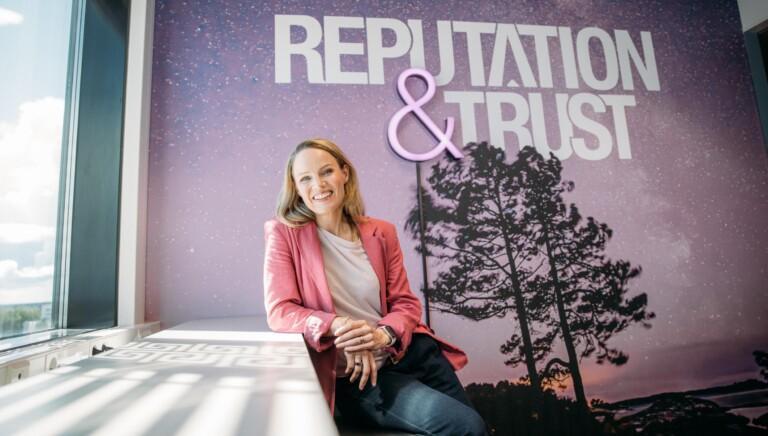
Lead Researcher Petteri Puska: “The debate over forcing employees to come into the office is making remote work a more important factor in choosing a job”
Employer Reputation Our 2026 study shows that the importance of remote work in choosing a job has declined slightly since last year. However, lead researcher Petteri Puska believes that flexibility in the workplace will continue to be valued. “The debate that flared up this fall over forcing people to return to the office will certainly increase the importance of remote work,” Puska says.
In a survey of professionals in the technology and business sectors, each respondent listed the three most important factors for choosing a job. Twenty-one percent of respondents cited the option to work remotely, down from 24 percent last year.
“The number of mentions may be influenced by the fact that the option to work remotely is now taken for granted. Many professionals in the technology and business sectors have found a good hybrid model for their work—one that offers flexibility and allows them to set their own pace for the workweek,” Puska notes.
“My interpretation is that the key word here is specifically ‘flexibility.’ Since the pandemic, many employees have started to enjoy coming into the office—as long as it’s on a voluntary basis. I think employers should be cautious about forcing employees to come to the office. The importance of remote work and flexibility in the workplace hasn’t gone anywhere, and it isn’t going anywhere.”
Wages have become a factor of unprecedented importance
The study found that a competitive salary was the most significant criterion for choosing a job; it has been cited by far the most often for five years in a row.
“The importance of a good salary has only increased since last year in nearly all of the subgroups examined. One could say that it is currently the most important factor by far: the gap between it and the second-ranked factor—interesting job duties—is now at a record high,” Puska notes.
Fifty-two percent of respondents listed a good salary among their most important criteria for choosing a job, while 29 percent cited interesting job duties. Last year, the corresponding figures were 51 and 31, and the year before that, 52 and 35.
“The importance of salary levels became more pronounced during the pandemic, while at the same time the importance of interesting job tasks and the meaningfulness of work began to decline. In today’s unstable global climate, people are clearly seeking security in their working lives. They are more willing to compromise on value-based considerations and the interesting nature of the work, reserving those enjoyable activities for their free time. This will certainly change once the world is back on track.”
Artificial intelligence is a cause for concern among technology experts
The desire for security in today's workplace was also reflected in the open-ended responses to the survey, where job security emerged as a strong theme.
“Respondents who were currently employed were more anxious than before and worried about whether they would keep their jobs, whether they would be able to find new work if necessary, and what would happen in the workforce in general. Among tech professionals in particular, there was a strong concern that artificial intelligence would take over and eliminate their jobs,” Puska says.
“Artificial intelligence appears to be the third major factor—alongside global political instability and a tight economic situation—that is currently influencing respondents’ focus on security. On the other hand, many experts also note that while artificial intelligence may change job descriptions, people will always be needed for tasks such as leadership.”
Here's how we conducted the study:
Reputation and Trust Analytics’ “ Employer Reputation Research ” was conducted 12 times between March 18 and May 24, 2026. The target group consisted of highly educated professionals and students in the fields of technology and business. A total of 2,171 respondents participated in the survey.
In the experiment, respondents were asked to select the three most important criteria from a list of 24 if they were choosing a job from among several offers. The list of selection criteria was developed based on Reputation and Trust Analytics’ workplace surveys.
Petteri Puskaa was interviewed by Anu Räsänen, a communications specialist at Reputation and Trust Analytics.