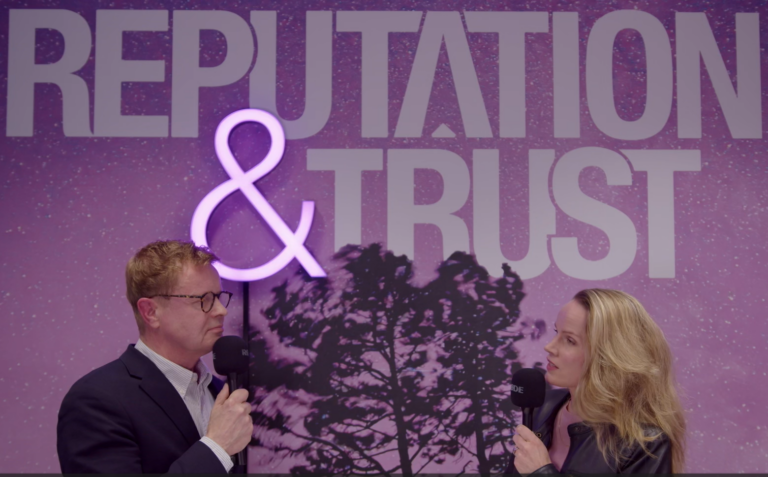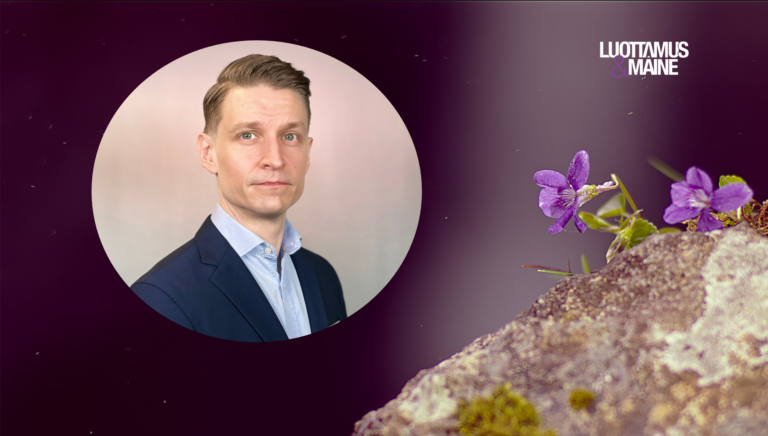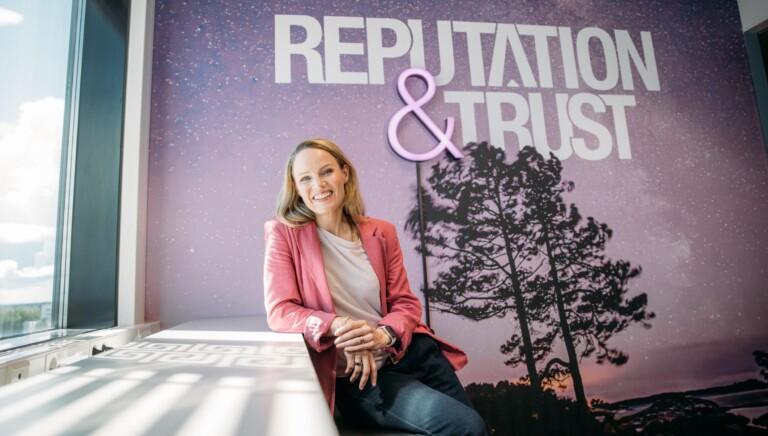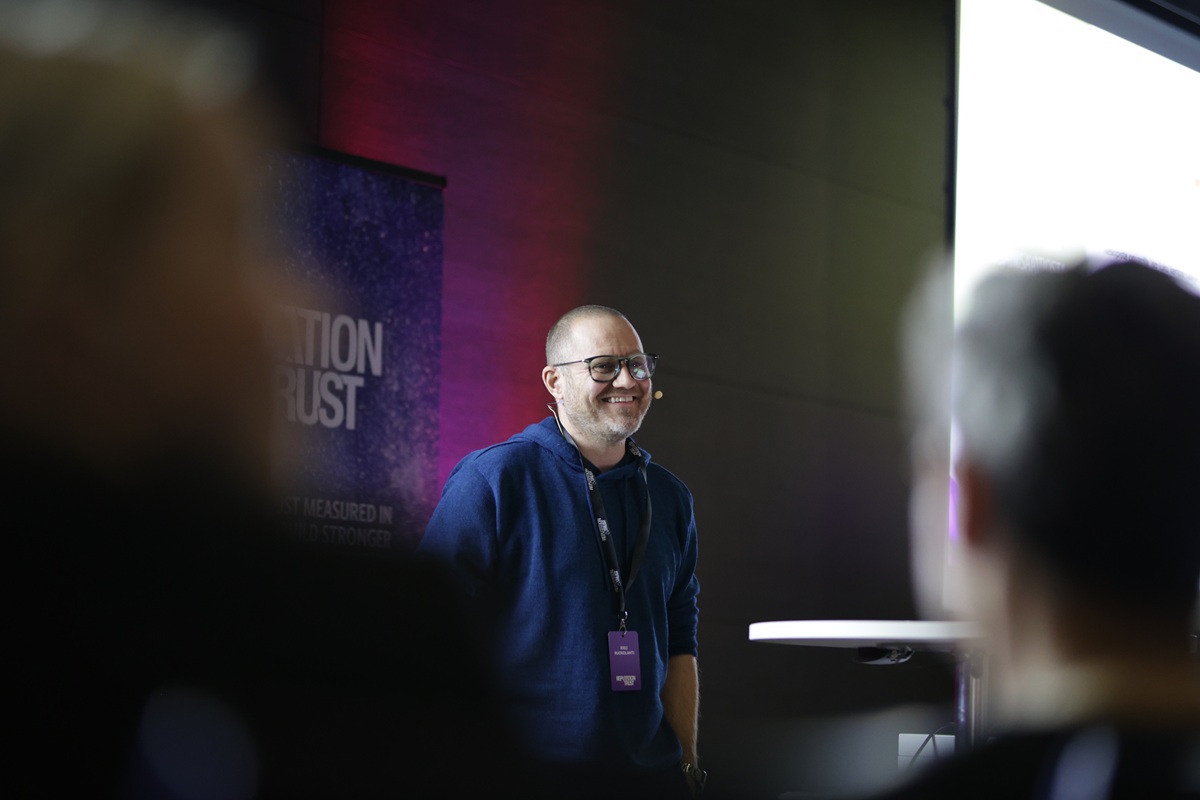
Riku Ruokolahti at the “ Reputation&Trust ” Awards seminar: “Communication has never faced a paradigm shift quite like the one we’re seeing now”
Artificial intelligence emerged as a key theme at our “ Reputation&Trust Awards 2026” seminar on Tuesday, October 20. Among other topics, the seminar featured a discussion on how artificial intelligence affects reputation management and expert work.
“So is artificial intelligence a new stakeholder that we should view in a new way?” asked Riku Ruokolahti, Director of Development, as he began his remarks at the seminar.
“Technically speaking, yes—even though artificial intelligence itself doesn’t want anything from us. However, everyone is constantly asking AI all sorts of questions, so it plays a decisive role in how we, as companies, are perceived,” Ruokolahti replied to his own question.
Ruokolahti went on to say that a company must take an active role with regard to artificial intelligence if it wants to control what the AI tells it.
“Artificial intelligence has plenty of answers and opinions, even if it doesn’t have the right information. That’s why companies can’t just sit back and wait to see what artificial intelligence does,” Ruokolahti said.
“Corporate communications have never faced a paradigm shift quite like the one we’re seeing now. One might even ask whether the pen is still mightier than the sword.”
“We can measure artificial intelligence just like any other stakeholder”
Ruokolahti pointed out that the first step in managing reputation is measuring it—including in the realm of artificial intelligence.
“Fortunately, we have a model that can simulate what AI ‘thinks’ about a company. With the ‘ Reputation&Trust ’ research model, we can measure AI just as we would any other stakeholder,” Ruokolahti said.
Based on this model, Reputation and Trust Analytics has developed a tool to support corporate communications and reputation management that measures a company’s reputation in a comparable way across different AI models. And development continues.
“Next year, we’ll be launching a tool that will help us understand what AI ‘thoughts’ will look like in the future and how we can influence them,” Ruokolahti hinted.
What data do the AI's responses rely on?
Following Riku Ruokolahti’s presentation, the discussion on artificial intelligence continued in a panel discussion moderated by our CEO, Salla Ketola. Among the panelists was Saara Hyvönen, one of the founders of DAIN Studios .
“The presentation we just heard was extremely fascinating, and I personally believe this is exactly the direction we need to take in the future. This is a familiar theme for all of us: whenever we need an answer to just about anything, we turn to artificial intelligence first. In order to start managing the answers provided by AI, we need to dig deeper and consider what data they’re based on,” Hyvönen said.
“Personally, when I use artificial intelligence, I’m used to choosing the best model available at any given time, but we can’t assume that everyone has access to that best model. Therefore, we need to be able to manage the responses provided by every model, including the free one that many people use.”
Artificial intelligence frees up space for thinking
Saara Hyvönen, STT Editor-in-Chief Minna Holopainen, and Kesko’s Director of Communications Karoliina Partanen also discussed the impact of artificial intelligence on future expert work and leadership during the panel discussion.
“In my work, I advocate for effectively combining artificial intelligence with human judgment. I emphasize that thinking cannot be outsourced to artificial intelligence. However, artificial intelligence can speed up processes and thus free up time for thinking,” Partanen summarized.
Holopainen echoed this sentiment when reflecting on the importance of artificial intelligence in the work of a journalist.
“We’ve carefully analyzed where AI can be put to the best use and where humans are still at their best. Humans are needed for the parts of a journalist’s job that are truly inspiring, and AI can take over the tasks that slow people down,” Holopainen said.
Hyvönen summed up the discussion by noting that the key is to find the right balance between the use of artificial intelligence and the human brain.
“This frees up space for what’s truly important to us,” Hyvönen concluded.
The most reputable companies were recognized with unique Finnish designs
At the end of the seminar, we presented the three most prestigious companies of the year—Kone, Ponsse, and Fazer—with a new, unique award designed by Katriina Nuutinen, made of glass and carbon-capturing concrete.
“This work combines authenticity, transparency, and sensitivity, and when it comes to reputation, we are also dealing with beautiful and sensitive matters, creating a better world. ‘This award is a statement set in stone about what matters, how we create a better world and make an impact, and how we are pioneers,’ Nuutinen said as he presented the award.”
Photo: Niko Jekkonen