Reputation&Trust Awards: Managing Reputation with Clear Metrics
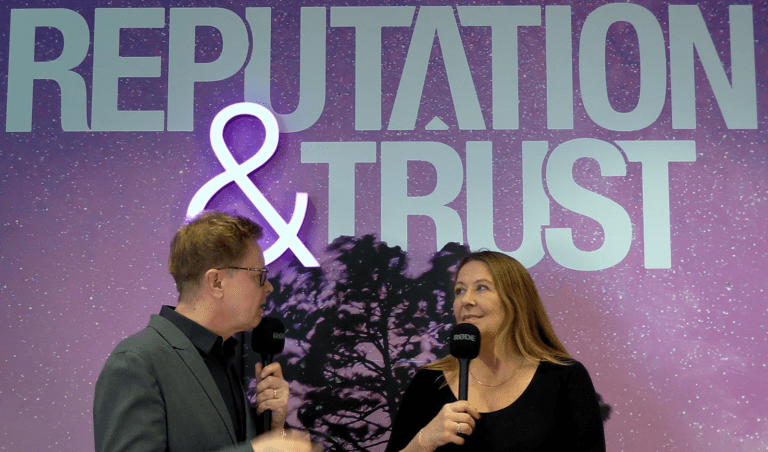
T-Media’s biggest event of the year, Reputation&Trust , was held as a webinar this year. In addition to honoring the most reputable companies of 2020, the event focused on the impact of the COVID-19 pandemic on business confidence and reputation, as well as anseende from an expert’s perspective.
Watch the entire webinar below!
Guests at the event included Arno Ahosniemi, editor-in-chief of Kauppalehti; Lauri Sipponen, former CEO of Lidl; Nina Elomaa, Head of Corporate Responsibility at S Group; and Jorma Mikkonen, Director of Public Affairs at L&T.
At the start of the webinar, Harri Leinikka, CEO of T-Media, presented the results of theReputation&Trust survey together with Hanna-Mari Aula, Senior Advisor at T-Media. The 2020 survey is particularly interesting due to the exceptional circumstances caused by the coronavirus. The business community has had to adapt quickly to sudden changes in its operating environment.
“Overall, trust has clearly strengthened,” said Hanna-Mari Aula, summarizing the study’s findings on changes in Finns’ trust in companies and the business community. In the study, 29 percent of respondents felt that their trust had increased as a result of the business community’s activities.
The progression of the pandemic has also affected people’s expectations of companies. These changes and expectations—and how companies respond to them—have a particular impact on corporate reputations. A company’s reputation, in turn, influences the extent to which its various stakeholders support the company — and trust it.

“Trust is an extremely valuable asset. Of all intangible assets, it is the most precious,” Leinikka continued. There has been a clear strengthening of the link between companies’ anseende the trust that Finns place in them during the COVID-19 crisis.
“A key aspect of our work is that, using Reputation&Trust, we have been able to identify, isolate, and validate eight distinct areas that strongly influence the development of stakeholder support. In this year’s study, the correlation between anseende stakeholder support has increased.”
anseende on business is not a matter of opinion”
Arno Ahosniemi, editor-in-chief of Kauppalehti, interviewed Riku Ruokolahtea , Director of Development at T-Media, about the themesof theanseende handbook unveiled during the webinar .
Riku’s book delves into the connection between anseende, business, and leadership, as well as the anseende building anseende . In Ruokolahti, they have experience from hundreds of management team discussions and an understanding gained through reputation assessments in their database.
Ahosniemi was interested in how Ruokolahti convinces companies of anseende for business.
anseende are, in practice, areas that someone is responsible for. These include accountability, leadership, products and services, and the workplace. It’s an impact analysis that reveals the big picture when we organize everything using data analytics. We show that this is how they have an impact — this isn’t just an opinion,” Ruokolahti said.

One anseende areas is corporate responsibility. Performance in this area changes over time: a level of corporate responsibility that was considered good ten years ago is no longer sufficient today. Ahosniemi highlighted Neste, which has recently been collaborating with its activist stakeholders. The bar for responsibility is constantly rising.
Corporate sustainability initiatives do not necessarily translate anseende an increase anseende , and this can lead to frustration.
“When companies want to improve their sustainability performance, they need to do so faster than expectations are evolving,” Ruokolahti summarized for companies grappling with sustainability requirements.
anseende is a job for leaders”
Lauri Sipponen, former CEO of Lidl, who wrote a chapter for Riku Ruokolahti’s handbookanseende , Nina Elomaa, Head of Corporate Responsibility at S Group, and Jorma Mikkonen, Head of Public Affairs at L&T, shared their views anseende during a panel discussion at a webinar.

anseende is a job for leaders, and that’s why we have experts here: well-known and experienced professionals from the field anseende , anseende Ruokolahti said as he opened the panel discussion.
Lidl is a success story in terms of reputation: the company managed to rise from a low ranking to the top of Finland’s most reputable companies. Last year, Lidl was the only retailer on Reputation&Trust list of the ten most reputable companies. Lauri Sipponen wrote an anseende account in his handbook anseende of how Lidl operated over the years as it built its reputation.
“As early as the 2010s, anseende became a concrete management tool for us on Lidl’s executive team. We reached a shared understanding of how we are perceived,” Sipponen said, describing Lidl’s journey toward building its reputation.
Reputation is built in everyday situations
Nina Elomaa, Head of Corporate Responsibility at S Group, views anseende just like managing any other aspect of the business: it involves both strategic and operational levels. However, Elomaa does not view reputation as solely the responsibility of the executive team; rather, she believes that reputation should be discussed and that reputation results should be shared openly with the entire workforce.
“It is extremely important that people within the organization understand anseende what it is. That’s why we need to talk about reputation at all levels. It’s good to share anseende . Reputation is built through interactions and everyday situations, and these are of great importance to the company— anseende its anseende for building trust.”
“In my own leadership, I have applied the concept anseende through accountability: the great importance of accountability anseende , through that, for growing a company’s intangible capital,” Elomaa said.

Jorma Mikkonen, Director of Public Relations, said that L&T has been monitoring its reputation among six stakeholder groups using Reputation&Trust since 2013. Mikkonen explains that L&T is expected to take action to advance the social dimension of sustainable development. L&T is strongly committed to the themes of employing special groups and extending working careers.
“In our matrix, employer image has the strongest correlation across all six stakeholder groups—from investors to the media and decision-makers, as well as our own employees. For us, this is the most effective way to gain support for our operations,” Mikkonen explained, outlining L&T’s employer brand strategy based on its reputation survey.
For more information:
Harri Leinikka,CEO
harri.leinikka@reptrust-staging.fi-p.seravo.com, 040 505 5001
Riku Ruokolahti, Director of Development
riku.ruokolahti@reptrust-staging.fi-p.seravo.com, 0400 512 200