The image of a strong state is built through a responsible, trustworthy, and well-managed government
"Public trust in government organizations is essential to the future of our democratic welfare society," writes Nina Laakso, Senior Advisor at T-Media.
T-Media’s “ Reputation&Trust ” survey, which focuses on public administration organizations, showed that citizens need a strong government in these times. At the top of the survey are organizations responsible for internal and external security: the Emergency Response Center Agency and the Border Guard. It is understandable that the importance of a sense of security is emphasized amid the turmoil in our external operating environment. Furthermore, the survey results reveal a notable desire for security in citizens’ daily lives, which is also fostered through the value-based leadership of the government.
What constitutes a strong government in the eyes of the public? It is not enough for security agencies alone to be perceived as trustworthy and well-managed. The government must also project the image of a cohesive, reputable entity: a well-managed and responsible servant of civil society. This can only be achieved through clear communication by each government organization regarding its own tasks and roles as part of the broader government system.
“What does a strong state look like in the minds of its citizens?”
In the current climate, and going forward, competition for skilled workers will also intensify. Building a positive employer brand and reputation is important for the government as well.
In addition to clear communication, using the right communication channels is crucial. Government agencies are highly interdependent in ways that the public may not realize. That is why all agencies must do their part to ensure that the system as a whole functions properly.
It all starts with management and leadership
Good public leadership can build the trust that citizens clearly and justifiably seek. We humans trust those we know and whose views we are familiar with more than those we do not know. Therefore, the government and its entire leadership must be able to improve both the quality and quantity of active, knowledge-based interaction with civil society. This will help build the predictability that society as a whole needs to make various choices.
The predictability that arises from good leadership and effective communication fosters the sense of security that a vision of a strong state requires.
A study on public administration conducted by T-Media showed that government organizations combining civil service management with political leadership are generally viewed more critically by the public. The activities of ministries are presumably, for the most part, civil service activities that are relatively little known to the public and are ultimately led politically. It is difficult for the public to distinguish which decisions are civil service decisions and which are political decisions. Nor do they need to.
What is essential is that the actors in central government who bridge the gap between political and civil service activities—namely, the ministries and Parliament—serve as models of good leadership and effective interaction for society as a whole, and thus also for the agencies under their purview. This will enable the central government as a whole to function more effectively and create even greater predictability and a sense of security for society as a whole.
Corporate social responsibility must be on the agenda of top management throughout the government
Operating in a comprehensive and responsible manner is regarded as a fundamental principle by government agencies. The government has very high ethical and moral standards for its operations, and it has generally succeeded in meeting them. However, there is a need for improvement, particularly in making its sustainability efforts—as well as its environmental and social footprint—more visible.
A good first step toward making sustainability efforts more visible was the central government’s sustainability report, published for the first time last year, in which approximately 70 percent of government accounting units released their own reports. The obvious goals are for sustainability work to be on the agenda of top management everywhere and for every single government agency to publish a report this year.
Central government agencies are still far from reaching the peak of their reputation. The importance of leadership is emphasized in the work aimed at anseende . Central government has the opportunity to achieve a level anseende trust among citizens—and even on the international stage—provided that it understands the importance of the anseende aspects anseende and recognizes the impact of leadership on its development.
The high level of trust that citizens place in government organizations is the best guarantee of the success of our democratic welfare society—both now and in the future. Building trust requires not only good leadership but also day-to-day work: identifying common areas for development, creative thinking, genuinely interactive and attentive stakeholder engagement, and energetic implementation.
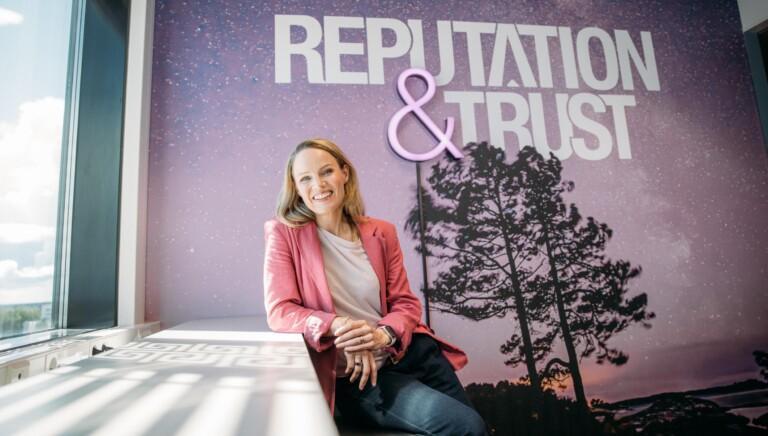
The author is Nina Laakso, Senior Advisor at T-Media and Doctor of Business Administration
+358 400 808 940
nina.laakso@reptrust-staging.fi-p.seravo.com