Raisio Mylly Named the Most Reputable Shopping Center Once Again
A study assessing the reputation of T-Media shopping centers revealed that Raision Mylly is once again the most highly regarded among the largest shopping centers. The Helsinki-based Kaari shopping center has seen the greatest improvement in its reputation compared to last year.
The reputation of Finland’s largest shopping centers was surveyed for the second time in late 2021. The survey included the ten largest centers based on both floor space and revenue. A total of 12 centers were surveyed.
For the second time, the title of Finland’s most reputable shopping center went to Mylly Shopping Center in Raisio. Opened in 2001, Mylly is the largest shopping center in Southwest Finland. For the second time, Redi Shopping Center, located in Helsinki’s Kalasatama district, was rated as having the poorest reputation.

The reputation of the shopping centers surveyed is generally moderate (reputation score of 3–3.5). Only Mylly and Kaari achieve a good rating (reputation score >3.5).
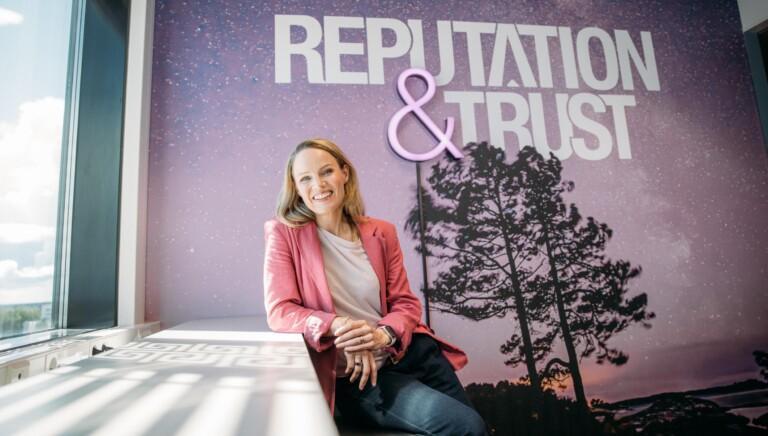
Reputation&TrustIn the study, reputation is measured using eight factors: governance, finance, leadership, innovation, engagement, products & services, workplace, and corporate social responsibility.
In general, products and services are considered anseende strongest anseende shopping centers. The value for money of the product and service offerings is therefore perceived as good. However, the area where shopping centers have the most room for improvement is interaction—that is, how people perceive shopping centers’ ability to listen to and understand their stakeholders.
“Innovation, however, emerges anseende most important anseende anseende factors, it is the strongest predictor of people’s positive behavior toward shopping centers,” says Hanna-Mari Aula, a senior expert at T-Media.
“Perhaps during the pandemic, shopping habits and the factors that influence people’s enjoyment of their time out are changing, which is reflected in the fact that shopping centers are now expected to evolve and operate in creative ways,” Aula muses. “Let’s hope that Redink’s development efforts will soon be reflected in its financial results.”
The Kaari Shopping Center saw the biggest improvement in its reputation
This second edition of the survey provided, for the first time, data on changes in the reputation of shopping centers. Overall, perceptions of shopping centers have weakened, and the reputation of most shopping centers has declined slightly. However, the Kaari shopping center in Helsinki managed to significantly improve its reputation rating compared to the previous year.
“Kaari is a welcome exception to the mainstream. Kaari has seen the greatest improvement in its reputation across all other anseende except the economy. This is a remarkable achievement, especially since the reputation of nearly all the other shopping centers surveyed has declined,” says Aula.
The study also examined people's attitudes and behavior toward shopping malls.
“People certainly want to go shopping at malls, but they are generally not considered very attractive places to work at the moment. Public support for malls is also weak in times of crisis, which means that any potential crises could escalate quickly.”
“Reputation has a major impact on the appeal of shopping centers—that is, on how much people trust them, how willing they are to shop or work there, and whether they recommend them or support them in other ways. By improving its reputation, a shopping center strengthens its appeal,” Aula notes.
The reputation of shopping centers has a strong influence on the behavior and trust of the general public
The study shows that shopping anseende have anseende strong anseende on stakeholder support—that is, on people’s behavior. While the average score for companies indicating this strength is 1.15, for shopping centers it is 1.35.
This means that when a shopping center’s reputation changes by one unit, stakeholder support changes by 1.35 units in the same direction.

Stakeholder support refers to people’s behavior toward organizations—that is, their trust, willingness to recommend the organization, invest in it, support it during a crisis, apply for jobs there, listen to it, buy from it, and work for it.
This is how we conducted the study
T-Media’s 2021 Special Study on Shopping Centers examined Finland’s 12 largest shopping centers using the “ Reputation&Trust ” model. The goal was to assess the reputation of shopping centers among the general public. By improving its reputation, a shopping center can also enhance its stakeholders’ trust, willingness to shop, recommend, invest, defend it in a crisis, apply for jobs, listen to it, or collaborate with it.
Data collection for the survey took place from November 4 to November 16, 2021. A total of
1,760 Finns. The survey’s target group consisted of Finns aged 15–65 nationwide (excluding the Åland Islands).
Two criteria were used to select the largest shopping centers: floor area and sales volume (Source: Finnish Shopping Center Association, Shopping Centers 2021).
For more information:
Hanna-Mari Aula, Senior Advisor
hanna-mari.aula@reptrust-staging.fi-p.seravo.com
+358 40 585 6466