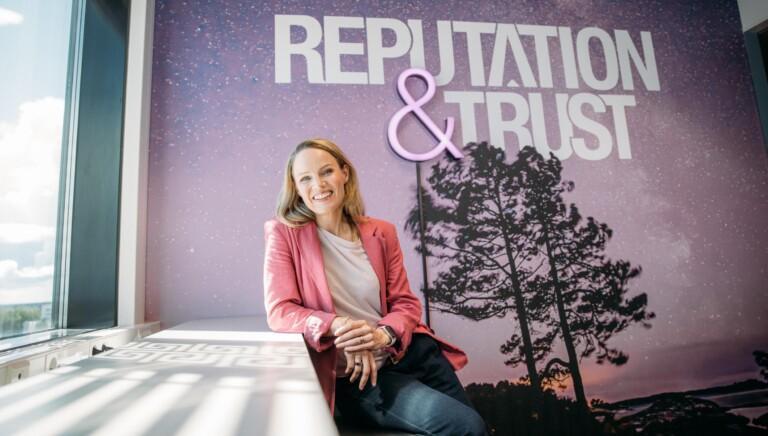
In the social and health care sector, reputation has a particularly strong impact on trust
T-Media’s annual “ Reputation&Trust ” survey of the social and health care sector examined the public’s perceptions and views of organizations in the sector. The survey reveals that reputation has a particularly strong impact on organizations in the social and health care sector.
The reputation of organizations in the health and social services sector has a greater-than-average impact on citizens’ trust in those organizations. The “ Reputation&Trust ” study reveals that, among the health and social services companies surveyed, a one-unit change in reputation is followed by a 1.25-unit change in stakeholder support. For organizations operating in Finland, the corresponding figure averages 1.15.
The study found that cost competitiveness among organizations in the social and health care sector was the most significant factor explaining stakeholder support. The next most important factors predicting public trust were employer image and corporate responsibility.
“The social and health care sector is labor-intensive, which means that the diverse workforce in the sector is the one that actually delivers the services. For this reason, employer reputation is of great importance in the social and health care sector. Social responsibility, in turn, is a megatrend whose impact on trust is evident in our research across all industries,” says Riku Ruokolahti, Director of Development at T-Media.
anseende to managing expectations – Tays enhanced its reputation during the COVID-19 pandemic
Tampere University Hospital (Tays) was the second-most highly regarded organization in the survey, behind the Coxa Joint Replacement Hospital. Tays has succeeded in improving its reputation during the COVID-19 pandemic: in 2019, Tays’ reputation score was 3.58, and the 2021 result was 3.78.
“The improvement in our reputation as an employer during the COVID-19 pandemic is particularly gratifying for us. People trust Finnish specialized healthcare,” says Elina Kinnunen, Director of Communications at Tays.
“The COVID-19 pandemic has increased face-to-face and communicative leadership and interaction. In the past, direct communication with public hospitals was difficult without a referral. However, this has changed—in part due to social media—and today we interact directly with people.”
Kinnunen notes that responsibility has become more prominent during the COVID-19 pandemic.
“Responsibility is the cornerstone on which we build, and the way an organization acts in uncomfortable situations reflects its level of responsibility. This is evident in the fact that we have been the first to speak out about uncomfortable topics. We must set the agenda ourselves, and we must take personal responsibility for crises.”
Kinnunen believes that the focus is shifting anseende to expectation management. An organization must understand the expectations of its stakeholders.
“We can’t just chase anseende good anseende . We have to stay ahead of the curve and know what’s expected of us. anseende must be strategic, proactive, and interactive.”
Mehiläinen rose from a satisfactory level to become a reputable company
Mehiläinen, a private provider of social and health care services, succeeded in improving its reputation from a satisfactory level to a good level. Mehiläinen raised its reputation from a moderate level (3.35) in 2020 to a good level (3.57) in 2021.
“Reputation and trust can only be built through actions. Everything stems from our core mission to promote better health and well-being. The past year has been particularly active for us in terms of our work related to the COVID-19 pandemic, the development of digital services, international growth, and strengthening public partnerships,” says Karolus Viitala, Chief Marketing Officer at Mehiläinen.
“Mehiläinen’s anseende has anseende significantly. I’m proud that the results of our systematic work are evident.”
This is how we conducted the study
The aim of the social and health care sector survey was to assess the reputation of selected companies and organizations operating in Finland among the general public.
The organizations were evaluated using T-Media’s “ Reputation&Trust ” research model, in which an organization’s reputation score is calculated as the average of eight different subcategories. These areas are corporate governance, finance, leadership, innovation, interaction, products & services, workplace, and corporate responsibility. The survey used a five-point rating scale (1–5).
Data for the study was collected via an online survey in March–April 2021. A total of 4,513 Finns participated in the study. The results have been compared to a similar reputation survey conducted the previous year, in which a total of 3,498 Finns participated in the spring of 2020. The survey’s target group consisted of Finns aged 15–65 nationwide (excluding the Åland Islands). The sample was weighted to be representative of the population by gender, age, and region of residence.
For more information:
Riku Ruokolahti, Director of Development
+358 400 512 200
riku.ruokolahti@reptrust-staging.fi-p.seravo.com
Text: Tuuli Pohjola