T-Media Relations Blog: Sustainability for the Future
I have now been working for a month as the Director of Sustainable Future at T-Media Relations Oy. My new job has been featured in publications such as Talouselämä and Helsingin Sanomat.
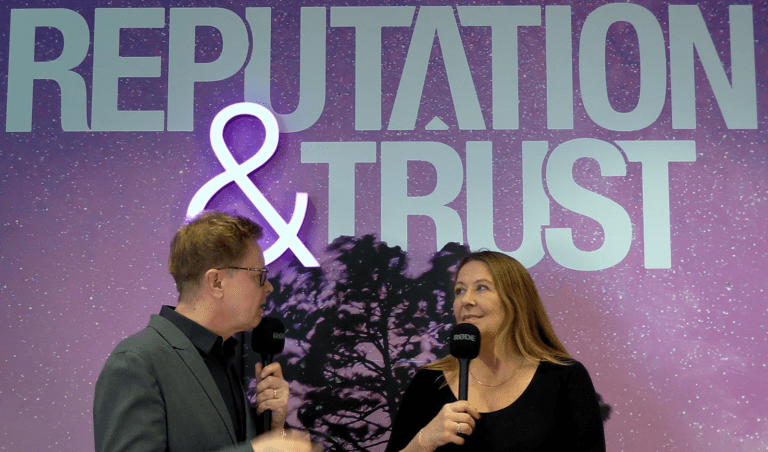
For me, the first month culminated Reputation&Trust T-Media Reputation&Trust , where Finland’s most and least reputable companies were announced. At the event, I gave a speech on a strategy aligned with the future.
Sustainability is everywhere
Companies are expected to act more responsibly than ever before. Corporate reputation and stakeholder support are also increasingly based on responsible business practices. Over 200,000 individual company evaluations from T-Media’s Reputation&Trust, conducted since 2013, show that customers and other stakeholders are thinking more carefully about the types of companies they want to do business with.
Environmental responsibility and changes in the operating environment are also clearly recognized in Finland’s government program. The government program begins with the following sentence: “Climate change, globalization, urbanization, an aging population, and technological development are changing Finland and the world perhaps faster than ever before.” The goal of the government program is “to make Finland a socially, economically, and ecologically sustainable society by 2030.”
Time is running out
The challenge is that we are exceeding the planet’s limits in areas such as biodiversity loss, nitrogen and phosphorus emissions, land use, and global warming. No country has yet achieved a high standard of well-being in an ecologically sustainable way. Perhaps Finland can be the first to do so.
When it comes to the climate crisis, it looks very much as though we’re running out of time. At the current rate, the carbon budget will be exhausted in 8 years and 2 months if we want to prevent the worst consequences of the climate crisis and limit warming to 1.5 degrees. Finnwatch’s calculator illustrates the carbon budget well.
“At the current rate, the carbon budget will be exhausted in 8 years and 2 months.”
According to a 2018 assessment by the Intergovernmental Panel on Climate Change, only 420 gigatons of carbon dioxide can be emitted into the atmosphere if there is a 66 percent probability that global warming will remain below the 1.5-degree threshold—considered safe—compared to pre-industrial levels. We are currently consuming the carbon budget at a rate of 1,332 tons per second. That amounts to about 4.8 million tons per hour and about 115 million tons per day—roughly twice Finland’s annual emissions. Every day counts.
This is an unacceptably short timeframe, and 2030 is fast approaching. One of the key economic policy goals of this government’s term is that “through government decisions, Finland will move toward carbon neutrality by 2035.” In light of current climate science, even 2035 is too late. Not to mention the EU target, under which carbon neutrality will not be achieved until 2050.
We need pioneering companies
Carbon neutrality cannot be achieved without the efforts of pioneering companies that drive and enable political decision-making. Climate action does not mean giving up or living in poverty. On the contrary. Pioneering companies are market winners who get to set the new rules of the game. Of course, if we don’t make progress, we’ll drift ever further from a carbon-neutral circular economy toward a prohibition economy. In that case, we may also face a decline in living standards. Or at least political measures so drastic that companies and individuals can no longer adapt to the change, leading not only to a climate crisis but also to a crisis of democracy and the economic system.
In the era of the climate crisis, corporate responsibility means engaging in external advocacy alongside internal sustainability efforts. From a company’s perspective, this means that, in addition to calculating and minimizing its own carbon footprint, it is worth considering how to maximize its ecological footprint—that is, to create a positive environmental impact through its own services or products. Or it may mean that once emissions have been minimized and the remainder offset, active advocacy work is undertaken to ensure that societal structures support responsible business practices even more strongly. Now is not the time to resist. Now is the time to accelerate.
“Investors increasingly expect sustainability to be an integral part of strategic business operations.”
Simply complying with legal requirements no longer meets stakeholders’ expectations for responsible business practices. Investors increasingly expect sustainability to be an integral part of strategic business operations. True leadership means being an industry pioneer and trailblazer, as well as a creator of new markets and ecosystems.
As stated in Finland’s Government Program: “The world of the 2020s needs pioneers. An ecologically sustainable Finland will lead the way in mitigating climate change and safeguarding biodiversity. As a pioneer, Finland can play a role greater than its size in solving this common challenge facing humanity. This opens up new opportunities for Finnish research, expertise, innovation, and businesses. The use of natural resources must be aligned with sustainable development goals.”
The horizon of sustainability is receding further
Another challenge is that the bar for corporate responsibility keeps getting set higher and higher. The standards one must meet to be considered a responsible social actor are constantly rising.
’s ambitious
sustainability initiative from two years ago now seems lackluster. It is not enough for stakeholders that the packaging is more environmentally friendly if the product inside is harmful to the environment.
Examples of ambitious sustainability initiatives are published every day. During my first month at T-Media, many news stories have stuck with me. A Swedish newspaper decided to ban ads from fossil fuel companies on its pages. In Australia, a large group of engineers refuses to work on fossil fuel projects. The University of Helsinki’s cafeterias (UniCafe) decided to stop serving beef. Honda decided to stop manufacturing fossil-fuel cars in Europe by 2022, and a software company offers its employees an employment benefit of offsetting their carbon emissions by planting trees.
However, a single ambitious initiative is not enough. Sustainability must be an integral part of daily business operations. Even if a company takes good, concrete individual actions and actively communicates them, various stakeholders—such as environmental organizations, journalists, or investors—may scrutinize the company’s other core operations if they do not themselves meet current expectations for responsibility.
The Recipe for Success in the Age of the Climate Crisis
To paraphrase Greta Thunberg, we don’t need hope. We need concrete action. Hope is everywhere when we take action. In the face of a major challenge, a positive message is important. Instead of saying that everything is going to hell, I believe in the protest sign my 5-year-old child made. They wanted to write on it: “You are all wonderful.”
What matters for success isn’t what you do every now and then. What matters is what you do regularly. The only companies that never fail are those that never try anything. Ultimately, success in sustainability work requires surprisingly little skill and expertise. What is needed much more is desire and enthusiasm—in other words, motivation. Above all, however, what is needed is the courage to act and take initiative. It means having the courage to try and accepting that things won’t always go perfectly. The only people who never fail are those who never try anything. As Franklin D. Roosevelt once said : the only thing we have to fear is fear itself.
“What is needed most, however, is unashamed action and initiative.”
During my first month in my new job, I’ve already had the chance to get involved in many projects. It’s rewarding to help accelerate sustainability efforts at large companies and organizations. At the same time, I’m surprised by how far along many companies’ sustainability work already is. On the other hand, regrettably many are stuck in the past. In the era of the climate crisis, everyone needs to act quickly. I want to help both the pioneers and those who are struggling to catch up. If we don’t succeed together, we will all lose. We will lose our shared, livable planet.
Leo Stranius
Head of Sustainable Future
T-Media Relations
+358 40 754 7371
leo.stranius@reptrust-staging.fi-p.seravo.com