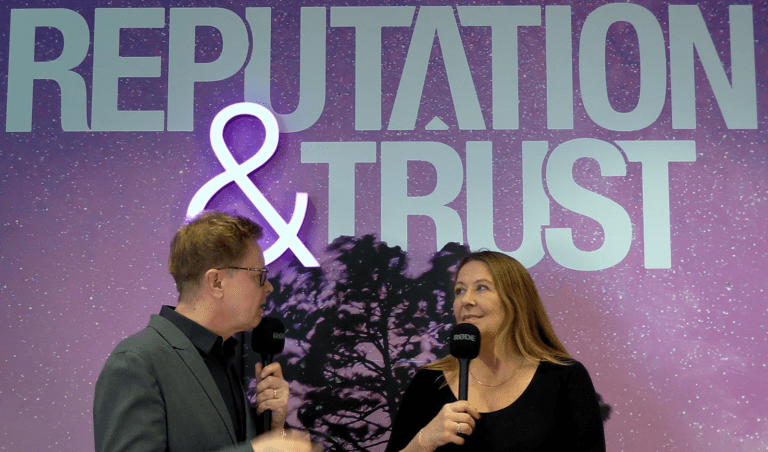
Reputation&Trust in Public Administration: anseende Starts with Active Leadership
In the age of social media, anseende based on an unfounded public image is unthinkable. A solid foundation for a reputation is built through organizational leadership that combines proactive decision-making, a willingness to innovate, and bold communication.
Among those who spoke on these topics were Carl Haglund, a director at Accenture; Ritva Viljanen, mayor of Vantaa; and Pekka Sauri, a professor of working life at the University of Helsinki, Reputation&Trust T-Media’s Reputation&Trust in Public Administration Reputation&Trust .
Harri Leinikka, CEO of T-Media, and Sari Maunula, Research Director, opened the event by presenting the results of a reputation survey of public administration organizations.
Based on the study’s impact analysis, they explained why reputation is so important to an organization: it correlates strongly with stakeholder support.
“As Tomi Korhonen, Head of Communications at Business Finland, notes Reputation&Trust : reputation management is not the sole responsibility of the communications department. It is a matter for the entire executive team. Proactive decisions and reforms by management, combined with well-managed communications, are a winning combination,” Leinikka said.
In his remarks, Carl Haglund pondered why organizations received lower ratings than companies specifically in the areas of adaptability and leadership.
“Companies have no choice but to innovate; otherwise, they’ll fall behind their competitors. Companies are also more accustomed than the public sector to putting their leaders in the spotlight to talk about their successes,” Haglund summarizes.
Haglund also pointed out that a successful public image is always based on real actions.
Ritva Viljanen continued on the same theme in her remarks. She called for radical transparency from the public administration.
“The legitimacy of public leadership depends on trust. If we lose that, we lose everything. Transparency compels us to act fairly and appropriately,” Viljanen says.
Viljanen noted that in today's world, the role of digital and social media cannot be ignored. Communication must be not only open but also prompt.
Pekka Sauri went on to say that communication tools such as smartphones have opened up the world to interaction that is multilateral, two-way, and real-time.
“If you’re not involved in the discussion about your organization, the discussion will take place without you. No organization can afford that anymore,” Sauri says.
According to Sauri, it is high time we realized that communications is not a support function. At its core, it is a strategic activity that goes hand in hand with the organization’s core business.
Sauri also urged people to put aside their concerns that employees might get too carried away on social media.
“If you trust someone enough to hire them, you can also trust them to handle your organization’s communications responsibly.”
Leo Stranius also called for courage and confidence.
Stranius summarized that the operating environment is changing, stakeholder expectations are becoming more stringent, and the horizon of responsibility is constantly shifting further away. For this reason, sustainability work is particularly important for every organization.
You don't have to know everything right away, though. You have to start somewhere, and there's no need to be afraid of failure.
“The only people who never fail are those who never try anything,” Stranius points out.
For more information:
Harri Leinikka,CEO
harri.leinikka@reptrust-staging.fi-p.seravo.com, 040 505 5001
Sari Maunula, Research Director
sari.maunula@reptrust-staging.fi-p.seravo.com, 050 409 1543
[button url=”/academy/” size=”btn-md” style=”btn-primary” target=””]View other Academy episodes[/button][button url=”/reputation-trust/” size=”btn-md” style=”btn-secondary” target=””]Learn more Reputation&Trust[/button]
Text: Anu Räsänen
Videos: Vesa Koivunen