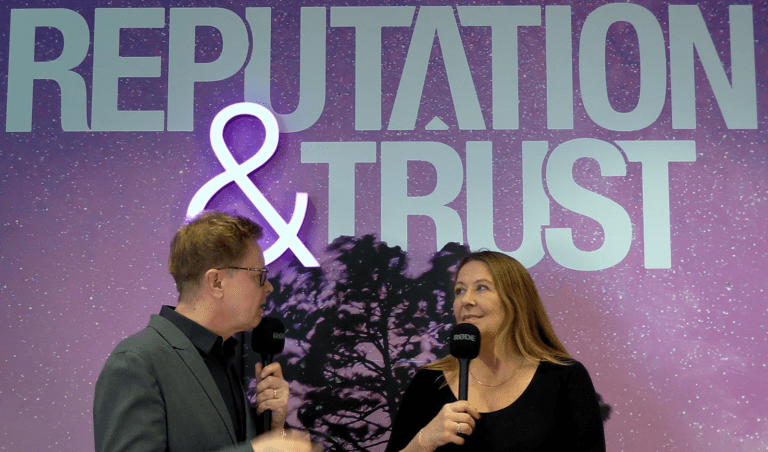
Tomi Korhonen, Director of Communications at Business Finland: anseende is an important part of crisis management
Tomi Korhonen, Director of Communications at Business Finland, notes that it is important to maintain a positive reputation even in the midst of a crisis. “And especially then,” Korhonen says.
The first step anseende is an anseende assessment anseende one’s own anseende , based on measuring it.
“In the midst of change, our perspective often narrows, and we tend to focus intensely on internal work. That’s when there’s a risk of losing touch with key stakeholders,” says Tomi Korhonen.
“That is why, in the midst of change, it is important to ensure that we have a brutally honest view of how the stakeholders who matter to us see us.”
Korhonen sums it up by saying that, when it comes to reputation management, behavior speaks louder than words. A company or organization can claim to be anything, but stakeholders are watching to see what lies behind the words and what the organization actually does.
Another important point Korhonen raises is that, even in the midst of a crisis, reputation is not created or maintained by the communications department alone—or by any other single unit within the organization.
“Reputation management is a joint effort involving the entire organization. This is a key element of success.”
Third, Korhonen points out that reputation is always a matter of dialogue.
“In reputation management, you have the opportunity to engage in dialogue with stakeholders who are important to your organization. You can’t simply decide what our reputation should be. A reputation becomes a reality the moment the recipient thinks, ‘That’s the essence of this organization.’”
In an emergency, it is important to identify the reputational impacts
Korhonen points out that even in the midst of a crisis, an organization must calmly analyze its own operations. Quick wins achieved through hasty measures do not contribute to a sustainable reputation.
“In an exceptional situation, it’s important to recognize what kind of impact our actions can have on our reputation. If you don’t manage your reputation at that moment, you’re just drifting in some direction and hoping that it’s the right one. In the worst-case scenario, anseende be destroyed in an instant by doing the wrong things in the midst of a crisis.”
Amid the COVID-19 crisis, Business Finland’s reputation management has underscored Korhonen’s observation that behavior is the best form of communication. The organization has received widespread praise for how quickly and effectively it responded to the crisis.
Korhonen attributes the success to the fact that the entire staff rolled up their sleeves and got to work.
“It took me a moment to realize that, in the midst of this crisis, we’ve actually been working exactly in line with our values. Our values are: together, on a grand scale, with enthusiasm, and with determination. All of these have been put into practice during the COVID-19 crisis,” Korhonen says.
In times of crisis, the importance of reputation management is also underscored by the fact that dialogue with stakeholders is more important than ever.
“Our collaboration with key stakeholders, such as the Ministry of Economic Affairs and Employment and the Federation of Finnish Enterprises, has worked very well in this challenging situation. It has been a key factor in the success of our communications.”
Tomi Korhonen's Three Tips for Reputation Management Right Now
Korhonen summarizes Business Finland’s lessons anseende during a crisis as advice for other organizations as well:
1. Getting our systems up and running quickly. We established a COVID-19 task force early on, and our communications shifted to a COVID-19 mode with unprecedented speed. We owe this to our skilled and knowledgeable staff.
2. Remember the importance of timely communication and empathy. During a crisis or period of change, communication must be timely and inclusive of stakeholders. This crisis has particularly highlighted the need to understand the customer’s situation—to be empathetic.
3. Be available to the media. The need for information is enormous right now. While the coronavirus is, of course, primarily a health crisis, we recognized our role and were able to communicate our perspective to the media in a timely and informative manner.
[button url=”/academy/” size=”btn-md” style=”btn-primary” target=””]View other Academy episodes[/button][button url=”/reputation-trust/” size=”btn-md” style=”btn-secondary” target=””]Learn more Reputation&Trust[/button]
Text by Anu Räsänen
Video production: Vesa Koivunen, Harri Leinikka, Tuuli Pohjola, and Riku Ruokolahti