Recording and photo gallery: What do journalists expect from corporate media communications?
“Once you remember that the media isn’t your company’s marketing channel, you’re already well on your way”
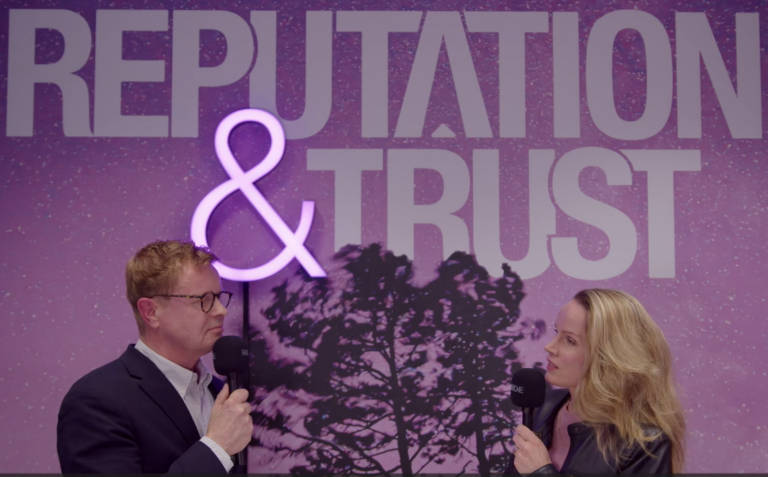
On Friday, veteran journalists Eeva Lehtimäki, Mikko Metsämäki, and Anssi Miettinen spoke to an audience of 300 people at our MediaBarometer breakfast event about what companies should keep in mind when approaching the media.
Watch the recording of the event:
An interesting finding emerged from the qualitative data of the MediaBarometer 2025 study: today, journalists want companies, above all else, to be proactive in providing content and perspectives.
Eeva Lehtimäki, a reporter for Uusi Juttu who participated in the panel discussion at the Mediabarometer breakfast event, sees a connection between the call for proactivity and the media’s increasingly tense situation.
“When the number of reporters has decreased due to budget cuts but content still needs to be published, editorial staff may think that active outreach from companies is an easy way to generate content,” Lehtimäki speculates.
“I’d like to see more broad-mindedness and visionary thinking from Finnish business leaders”
The panelists hoped that, in addition to being proactive, companies would show more of a human touch—having people speak on their own behalf, using their own voices, rather than relying on polished, templated email responses.
“For example, Varma—which received the highest score ever in the Mediabarometer—bases its communications on its CEO. Risto Murto is a leading pension expert, but he also participates in broader societal discussions,” Lehtimäki says.
“I’d like to see more broad-mindedness and visionary thinking from Finnish business leaders. I’d also like to see more women in leadership roles in the business world. That’s a major shortcoming.”
“The audience isn’t interested in a company’s feel-good stories that lack edge”
The panelists also emphasized the importance of companies understanding what interests journalists—and, ultimately, the audience.
“The public isn’t necessarily interested in a company’s feel-good stories that lack any edge,” summarized Mikko Metsämäki, news editor at Kauppalehti.
“You need to be able to read the world and the field in which a company’s expert could offer a unique perspective. Once you remember that the media isn’t your company’s marketing channel, you’re already well on your way,” Lehtimäki continued.
It's okay to be rough around the edges
The panelists agreed that company representatives, too, can have an edge when speaking in public. It’s okay to use a regional dialect, show a sense of humor, and even have a few rough edges. A real, human person is more interesting than polished slogans full of corporate jargon.
“I don’t thinkBjörn Wahlroos is still on active duty, but it says something about how much has been written about him. He has the intellectual capacity and the courage to speak about issues that aren’t strictly within his purview. I’m interested in people who dare to speak out and offer a broader analysis,” Metsämäki points out.
It's a good idea to seek support for crisis communication
Lehtimäki notes that social media and its algorithms have caused some companies to fear the consequences of what they say. A few poorly chosen words can spark a firestorm that is impossible to control.
However, it’s never possible to control everything, which is why Lehtimäki considers training and support in crisis communication to be good ideas. She has also worked at a communications agency herself and has seen how the euros spent on crisis communication are sometimes criticized.
“It’s just smart to hire a crisis communications firm for the company. When you’re in a crisis, people tend to turn inward, cling to straws, and take things personally. That’s when you need an outside perspective to assess the situation and say, ‘Let’s just move forward using common sense,’ and then the crisis will be over more quickly,” Lehtimäki notes.
In a crisis, speed and transparency are key. Anssi Miettinen, editor-in-chief of the Visio supplement of Helsingin Sanomat, also offers one practical tip for companies facing a crisis.
“I don’t necessarily need more press conferences. However, in a major crisis, it’s appropriate to hold a traditional press conference where someone answers questions in person,” Miettinen advises.
The Most Common Mistakes Made by Companies
So what are the most common mistakes companies make when approaching suppliers?
“Perhaps it’s the fact that no one has asked the question: ‘Would I read an article on that topic myself if I didn’t work for this company?’” Miettinen says.
The panelists also urge companies to be patient while waiting for a reporter’s response to a message. Even a good story idea may take a long time to consider, and it’s not possible to pursue every idea.
“Sometimes I’ve received a completely trivial story pitch, and then they’ve called me ten times in a row about it. It’s better to just send a text message,” Metsämäki says.
The panelists also pointed out that media relations are, above all, interpersonal relationships, even though they involve work on both sides. It’s a good idea to meet with reporters over breakfast or lunch, for example, and get to know them.
“People have to eat something anyway, and human interaction is important,” Anssi Miettinen sums up.
Persistent and systematic communication
Following the panel discussion, Leena Rantasalo, Head of Communications and Branding at VTT, summarized her own experiences regarding the cornerstones of successful, trust-building media communications.
“When it comes to communications, management support is the be-all and end-all. Of course, communications must also demonstrate how they add value to the company and build its reputation,” Rantasalo says.
“Communication requires perseverance, a systematic approach, and being available even when things get tough. Messages should be relevant to each media outlet, and journalists should feel that we’re providing added value—not just promoting ourselves.”
At the conclusion of the Media Barometer event, OP Pohjola was named the year’s most distinguished media communicator. St1 took second place, while Fazer and Nokia tied for third.
Photos from the event:


Photos: Vesa Koivunen
Text: Anu Räsänen