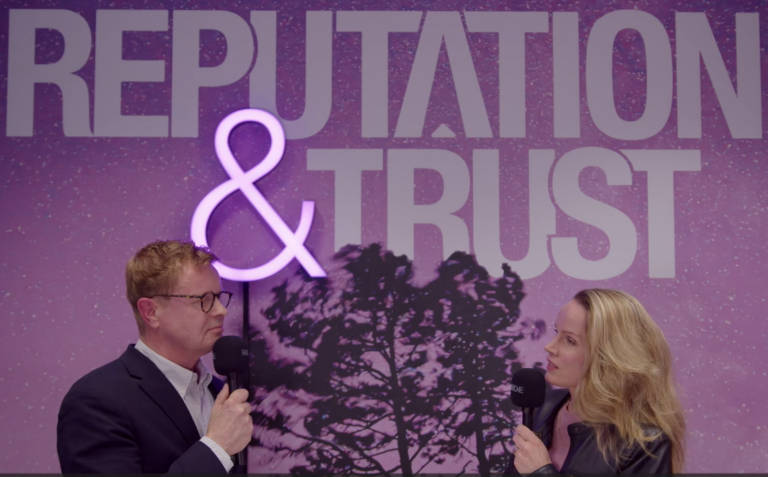
At the "Morning at the Core" event, a discussion on corporate responsibility: ESG metrics can be managed and measured
The theme of ProCom’s “Aamu ytimessä” event was corporate responsibility and the investment world’s sustainability term, ESG. Riku Ruokolahti of T-Media, Sari Kuvaja of Third Rock, and Nina Elomaa of the S Group discussed how a company’s ESG image can be managed and what challenges and opportunities are associated with communicating it.
The acronym ESG—which stands for environmental, social, and governance—is now a standard part of today’s corporate sustainability vocabulary. Riku Ruokolahti, Development Director at T-Media, explained in his speech at the “Aamu ytimessä” event how researchers had identified a total of 33 acronyms related to sustainability, of which ESG is one of the earliest.
ESG originated from an initiative that sought to align capital markets with sustainability, the needs of stakeholders, and the needs of the world.
“In 2004, Kofi Annan sent a letter to the CEOs of more than 50 of the world’s leading financial institutions, inviting them to join a joint initiative aimed at integrating sustainability considerations into the capital markets. The initiative resulted in a 2005 working paper titled Who Cares Wins,” Ruokolahti explains.
As a result of the project, the capital markets embraced ESG and began to require companies to meet the criteria outlined in the project: sustainability information and its measurability. A key motivator for adopting ESG principles was the ability to scientifically demonstrate that sustainability measures led to an increase in shareholder value.
The ESG Perception model reveals what people think about a company's sustainability
Ruokolahti explains that T-Media has been measuring ESG subcategories using the “Reputation&Trust ” model for the past ten years: the database thus allows us to observe how ESG perceptions have evolved over time. The research model aims to identify, isolate, and formulate those generic perceptions of the organization that are linked to stakeholders’ behavior toward the organization:
“Reputation&Trust is a competitiveness model that shows how stakeholders can boost a company’s competitiveness through their own actions. The model covers the same aspects that are also measured in ESG.”

Ruokolahti says that it’s worth measuring and tracking a company’s reputation for corporate responsibility: how are you perceived, and how are your competitors perceived? Are you better or worse in comparison?
“What is seen as greenwashing today might have been a heroic act in the 1990s. Moral and ethical standards are constantly changing, as is people’s perception of what it means to be responsible. And legislation follows suit, because we’re already demanding that things happen now, even if they aren’t yet defined by law.”
“As consumers, job seekers, investors, and voters in a democracy, we act based on how we interpret the actions of various actors. An actor can lose its right to operate in society if people believe it is acting unethically,” Ruokolahti continues.
In T-Media’s ESG Perception model, “perception” refers to how an organization is viewed. Based on their views, people favor companies they believe operate responsibly.
“We can verify directly from the data that this is indeed the case. Companies that are perceived as more responsible are favored. People want to work for them and buy more from them. And, as has been proven through ESG, these companies also secure financing at a lower cost. Consequently, organizations perceived as more responsible are more competitive than their peers in this regard.”
In communication, one can speak of achievements only through actual actions
Ruokolahti notes that simply tracking perceptions is not enough: responsibility has two dimensions, both of which must be measured. The first and most important is actual performance—that is, factual metrics.
“How are we performing in the areas of sustainability? What is our carbon footprint? How much water do we use? In sustainability communications, we can only talk about performance through actual actions; otherwise, the organization is guilty of greenwashing.”
“When we monitor our actual performance in sustainability and how we are perceived as a result, only then are we at a level of leadership where we effectively manage both sustainability and communication.”
Corporate social responsibility communications require data and metrics to verify commitments
Sari Kuvaja, Head of Sustainability Services at Third Rock, discussed the factors that contribute to the credibility of sustainability communications. Kuvaja has been following the development of corporate responsibility and sustainability communications within the industry since the 1990s and notes that in the early days of corporate responsibility, sustainability communications were typically based on claims:
“To put it a bit bluntly, the companies’ message was, ‘This is what we’re doing, and it’s a good thing.’ There was hardly any dialogue, especially with critical stakeholders.”
Strategic corporate responsibility has been a topic of discussion over the past five years, and responsibility management has been integrated into business management. Typical examples of responsibility communication include the commitments made by companies, which could also be called promises. As an example, Kuvaja mentions a commitment to carbon neutrality by a specific date:
“Commitments are a good thing because stakeholders can hold companies accountable for them, but they alone are not enough for corporate responsibility communication. Data and metrics are also needed to verify that these commitments are being met.”
Kuvaja notes that reputation and credibility are built over the long term. Credibility, which is built through transparency, can be drawn upon during reputation crises.

“Reputation cannot be used as a lifeline if it has not been built up over the long term. Transparency also involves recognizing and acknowledging that things are a work in progress—in other words, that when it comes to responsibility, we are never quite finished. It’s not worth waiting to communicate until all goals have been achieved. The goal will slip away.”
Sari Kuvaja's Recommendations for Sustainability Communication
1. Put your organization to work for sustainable development
2. Treat your stakeholders the way you would like to be treated
3. Communicate about responsibility, even if the work is a work in progress—because it will always be a work in progress
For the S Group, corporate responsibility is part of its business strategy
Nina Elomaa, Head of Corporate Responsibility at S Group, said in her remarks that stakeholders must also be informed about matters that are still in progress or uncertain. Communicating about future aspirations can feel challenging when there is no absolute certainty that the goals will be achieved.
“I know it feels uncertain and that you might hesitate to say this. However, it’s necessary to talk about our goals and the work still in progress, because we’re constantly moving forward, and along the way we need to be able to review our goals. Not just among external stakeholders, but also within the company,” Elomaa says.
According to Elomaa, in addition to communicating goals, corporate responsibility communications must focus on what is essential to the company. The message must be engaging, but it’s not worth getting bogged down in trivial details.
“If a company is tackling major issues and its key challenges relate, for example, to emissions, then talking about plastic straws might seem a little odd.”
Companies as Pioneers in Solutions
Nina Elomaa explains that the S Group continuously reviews its business strategies from the perspective of corporate responsibility. The company must stay closely attuned to developments, as expectations regarding corporate responsibility have grown, and global challenges cannot be tackled solely through regulation and traditional oversight.
“We, as companies, are the ones who bring solutions to the table. I’ve heard from EU policymakers that it sometimes even seems unnecessary to enact legislation when companies have already moved forward and are implementing the objectives that the legislation is intended to regulate.”
Elomaa says that corporate responsibility is becoming an increasingly important priority for companies. Currently, the focus of corporate responsibility is particularly on regulation, transparency, and communication. Sustainable development is promoted through various regulations, and companies have a wide range of operational frameworks in addition to ESG.
“We need to find the right metrics in this world of metrics, figures, and numbers so that we can move forward at both the strategic and operational levels. We must keep in mind that the figures need to be communicable and understandable,” Elomaa says.
In addition to performance metrics, the S Group uses the " Reputation&Trust" model to measure its ESG reputation.