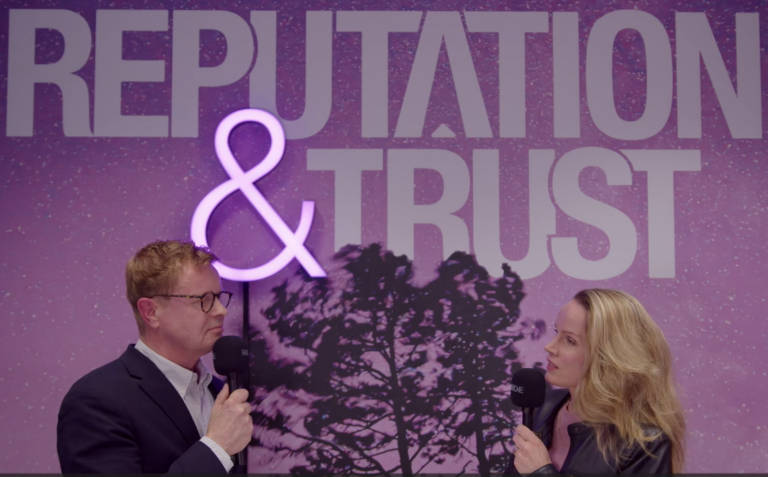
Kari Väisänen: Good media relations require responsible corporate communications that inspire trust
“Many companies fear the media, but the media can also be a partner,” says Kari Väisänen, Senior Consultant at T-Media. Communication is always a two-way street. Corporate communication requires both the company and the media. The framework for corporate responsibility must be strictly adhered to.
Traditional media is undergoing major changes. Rapid technological advancements are driving changes in both the media itself and the ways it is used: an increasing number of Finns are consuming media online. At the same time, corporate and organizational media communications are also undergoing a transformation.
“Traditional media no longer exists. Companies often think that this change makes communication difficult. That’s not the case; change also brings opportunities, because social media and an increasing amount of digital media have emerged alongside traditional print media,” says Kari Väisänen.
“Anyone can be a media outlet. Companies have come to realize that they can create their own media content, which isn’t limited to traditional media but also extends to other channels, such as Facebook, Twitter, and Instagram.”
According to Väisänen, corporate communications must evolve just like all other forms of communication. As recently as 20 years ago, the focus was on public relations. Today, the conversation has broadened to include communication and interaction.
“Communication is always a two-way street. Corporate communication requires both the company and the media.”
Well-deserved content builds credibility—even among investors
The media exposure of companies and organizations can be divided into three categories: owned, paid, and earned media. According to Väisänen, it is important for a company to utilize multiple communication channels.
However, one medium stands out above the rest.
“Earned content is when the media takes an interest in a company’s affairs and covers them, regardless of the platform. Users value that kind of content more than ever.”
Väisänen points out that the term “media user” is a broad one. Private investing has surged in popularity recently, and there are now more Finnish shareholders than ever before. This means that an increasing number of media followers are also investors these days.
“If earned content is perceived as reliable information, it plays a significant role in various investment decisions.”
Väisänen notes with satisfaction that the volume of business journalism has increased and, at the same time, its quality has improved, as readers are now more interested in business content.
As a rule, retail investors are the group that generates information on the stock market and drives trading in a company’s shares. Active trading also determines the company’s market capitalization.
Good media relations are based on trust
The fragmented media landscape is reshaping and increasing the need for media relations management in companies and organizations. Väisänen has observed that this is creating a greater need for specialization among corporate communications professionals.
“Listed companies in particular—but why not small and medium-sized enterprises as well?—need several communications professionals. One person focuses on social media, while another handles media relations separately. It’s impossible for one person to handle all aspects of communications. The media today is more multifaceted than ever,” says Väisänen.
According to Väisänen, managing media relations is all about prioritizing content and trust. Companies and organizations shouldn’t be afraid of the media; instead, they should feel free to reach out to journalists and suggest story ideas.
“However, you shouldn’t act solely with your own self-serving interests or the promotion of your brand in mind. You should always put the customer first, so that the media perceives your communication as sensible and trustworthy.”
“Companies and organizations should bring their experts and their expertise to the attention of the media so that people stay top of mind with journalists.”
“All too often, the same faces keep appearing in the media when certain issues are discussed. You have to make yourself known. It’s pretty rare for someone to be picked up from home. You have to be able to highlight your role as an expert.”
Personal relationships are making a comeback
Väisänen notes that the media is showing increasing interest in sustainability issues. Corporate and organizational sustainability, as well as climate and environmental awareness, are closely linked to corporate communications and the media.
“We must strictly adhere to the guidelines for corporate responsibility. We must be honest.”
“A bank executive once said that you can only lose trust once, and that’s very well put. The same applies to managing media relations. In life, you have to nurture all your relationships. Companies realized the importance of media relations years ago. Corporate communications professionals are often members of the executive team, and they have a direct line to the CEO.”
Väisänen notes that while there are many traditional methods and a host of new ones for managing media relations, personal relationships and face-to-face meetings are making a comeback in all forms of communication. Both the media and businesses value face-to-face meetings and conversations.
“Once we’ve finally gotten rid of this damn coronavirus. That day—a new tomorrow—will come.”
anseende in the media fosters understanding
Companies and organizations should track and measure the success of their media relations. There are many different ways to monitor the reach of their own messages, but according to Väisänen, that alone is not enough to measure the quality of media relations.
“That used to be enough when we talked about public relations. Back then, it was enough to show that we had appeared in various media outlets a certain number of times. Today, it’s more important to consider and understand how the media and journalists perceive different organizations and companies, and their communications.”
“At T-Media, we have developed the MediaBarometer, in which journalists evaluate the communications of companies and organizations: how successful the communication has been, whether it is reliable, how well-known the company’s CEO is, and how the communication of different organizations compares to, say, that of competitors or other organizations operating in the same field,” Väisänen explains.
T-Media’s MediaBarometer survey illustrates journalists’ views on media communications at a general level and measures the organization under study’s recognition among journalists. The survey closely tracks journalists’ perceptions of the organization’s operational media communications and their effectiveness, and measures anseende organization’s anseende among anseende .
“In the MediaBarometer survey, organizations can choose to compare themselves with other players in the same industry or with competitors. This also allows them to see how journalists view other players in the same industry. The survey is an excellent tool for conducting a comparative analysis of the industry landscape.”
[button url=”/mediabarometri/” size=”btn-md” style=”btn-primary” target=””]Learn more about MediaBarometer[/button] [button url=”/luottamus-maine/” size=”btn-md” style=”btn-secondary” target=””] The “Reputation&Trust ” model[/button]
Text: Tuuli Pohjola
Video: Vesa Koivunen