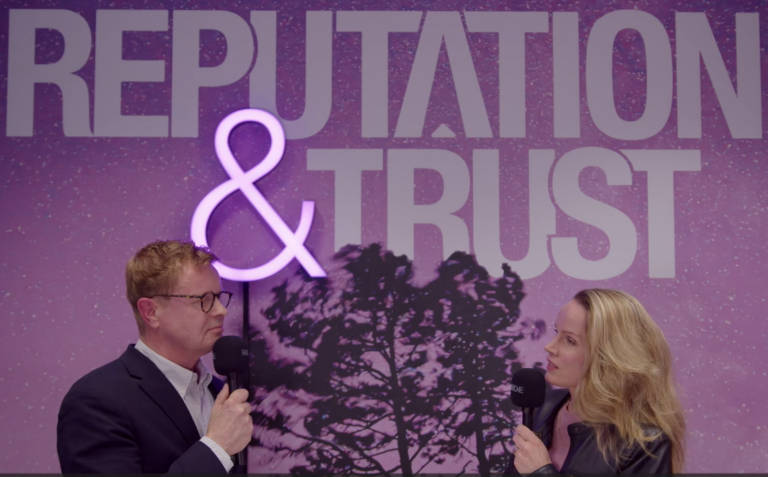
Riku Ruokolahti: What will you lose if you lose your reputation?
“People only start caring about their reputation when it’s too late,” says Riku Ruokolahti, Head of Development at T-Media and author of a handbook anseende .
WHEN I say “reputation,” fear comes to your mind—that’s how it went. You can’t really even talk about reputation without people’s thoughts drifting to the darkest depths of the business world. This gloomy interpretation keeps coming up, even when the intention is to discuss the anseende aspects anseende . Why are “reputation” and “crisis” so tightly intertwined as concepts? Couldn’t we just focus on the positive?
Moving forward with joy isn’t possible because companies have learned, through past examples, to fear for their reputation. If you haven’t been in the thick of it yourself, you may have empathized with others’ crises and felt their pain as a colleague. Add to that the fact that your only firsthand experience of a corporate crisis is a live role-playing game (crisis communication exercise) organized by a crisis communication consultant, and it’s no wonder you might feel a little nervous. What if we lose our reputation, too?
A reputation doesn't just vanish into thin air
But what do you lose if you lose your reputation? And where does it go? In previous chapters, we’ve already gone over the mechanisms through which reputation generates value for a company or organization. In a crisis, you face the risk of losing the performance anseende . In discussions about reputation—and especially in the context of crises—I’m constantly bothered by the idea that reputation is a binary concept. By this I mean that the conversation about reputation is often completely black-and-white: either you have a reputation, or you don’t.
There are two things wrong with black-and-white thinking about reputation. First: reputation is constantly evolving and exists at some level at every moment. It is never purely good or bad. Even anseende statistically modeled “good” anseende , there is a vast range of different levels and abilities to generate value for the company. And many companies still do not know what level their reputation actually is at. In that case, the company also cannot have any idea of the kind of performance it might be losing. This leads to a logical inconsistency: why, in the midst of a crisis, focus obsessively on safeguarding something that the company has not previously shown even a passing interest in—to the extent of having assessed the level of that performance in the first place?
What will you lose if you lose your reputation?
I’m writing this so bluntly because this is often the reality. We often find that we only become interested in our reputation when it’s already too late. By then, it’s impossible to go back in time and measure the reputation—gilded by memories and, in our own eyes, excellent—that we once had. In such cases, our reputation before its loss remains an eternal mystery.
When you analyze your reputation and the key factors that contribute to its value, you’ll also gain a better understanding of the associated risks—or at the very least, your company’s leadership will develop a unified understanding of the issue. This provides the organization with the foundation to understand what to defend and how to defend it when protecting its reputation.

“When you analyze your reputation and the key factors that contribute to its value, you’ll also gain a better understanding of the risks involved,” says Riku Ruokolahti.
Second, a company’s reputation rarely disappears completely. I often hear industry experts drive home their point by quoting Warren Buffett:anseende takes twenty yearsanseende , but you can destroy it in five minutes.” This is only entirely true in a situation where anseende has been built on a complete lie. Something like this: “After 20 years of marriage, it turned out that my spouse had been keeping two other families on the side the whole time, and I had no idea!” Even in a case like this, though, it takes more than five minutes anseende .
It would be very difficult for any trusting spouse to believe the veracity of the new information just mentioned. One’s own conscience would resist even the most compelling evidence for a long time. We’ll return to this specific phenomenon later. Generally speaking, companies don’t set out to deceive anyone, but rather resolve the conflicting expectations and desires of their stakeholders through compromise. Corporate crises are very rarely cases of outright fraud.
The root causes of crises influence the outcome
Most crises stem from pure accidents, operational errors, excessive favoritism toward one stakeholder at the expense of another, or a combination of these factors. An accident could be, for example, a factory fire caused by lightning or an employee’s heart attack resulting from undiagnosed coronary artery disease. An operational error could be, for instance, a security-critical design flaw in a banking system. Favoring certain stakeholders at the expense of others is, however, a much more complex issue. This is because we are dealing with an area that very often relies purely on ethical interpretations. There are many recent examples of this.
For example, interest payments on intra-group loans from the Isle of Jersey may be legal in certain contexts. anseende , however, it is more important to ask whether they are acceptable. When high interest rates on group loans are paid into tax havens, this effectively means that the societies where the business is conducted receive significantly less tax revenue from those operations. The business owners, on the other hand, end up with more net cash in their pockets. Conflicting desires and needs among stakeholders, isn’t that right?
Most crises stem from simple accidents.
Of course, law and order provide a framework within which a company can operate. However, a moral and ethical interpretation of what is right, wrong, or simply the appropriate course of action for our organization is an entirely different matter from the legal provisions that set limits.
Combinations of crisis factors are the most troublesome. Let’s look at some examples again: management cuts corners on safety to save money, look good to the owners, and ensure they receive the bonuses set by the board. The whole structure is based on wishful thinking and a forecast grounded in past experience. Nothing bad can really happen here—it’s never happened before! And yet, completely out of the blue, an accident occurs. The aftermath can be devastating. It’s a morally and ethically appalling situation, but there have been plenty of such cases throughout history. The world’s most devastating corporate disasters follow precisely this pattern.
Cost-cutting measures in safety systems and their maintenance have been cited as the cause of the 2010 British Petroleum oil spill. The backup system, which was supposed to shut down the well in an emergency, failed completely when the oil rig caught fire and sank to the bottom of the ocean. The result was the largest known environmental disaster in American history, as the drilling pipe, buried at a depth of one and a half kilometers, spewed oil into the ocean at a terrifying rate for 86 days. The actual safety measures had failed, and it was extremely difficult to stop the leak with makeshift solutions. Try managing crisis communications when millions of liters of toxic oil are pouring into the ocean every day and there’s no clue how to stop the leak.
Generally speaking, a reputation isn't simply "good" or "bad," and a reputation earned over decades doesn't just "disappear" into thin air.
The previous examples were extreme cases. Generally speaking, a reputation isn’t simply “good” or “bad,” nor does a reputation earned over decades simply “vanish” as a result of a single critical mistake. Such an event would require a significant risk and extremely weak foundations. However, these ticking time bombs have been proven to exist, and they are surely still smoldering somewhere. Surely you don’t have any critical issues that you’re overlooking?
We are prisoners of our delusions
You may have attended a communications training session where, without much explanation, the following mantra is repeated: “And reputation carries us through crises. It’s like an important shield.” And so on. Does this sound familiar? When you hear this mantra, it’s worth asking whether it really holds true—and if so, how. In the following, we’ll take a closer look at this phenomenon.
How would you feel if you heard that a truly competent person and close friend—someone you’ve known for a long time, whom you trust completely, with whom you consciously seek to work on the same projects, and whose expertise you turn to when facing problems—had bought their degree online? It would be hard to believe, wouldn’t it? This new information conflicts with what you previously knew or felt, and that’s uncomfortable. You’d rather just forget the whole thing.
Fortunately, it later turns out that this competent and trustworthy friend of yours does have a degree to show for it, even if it might not be quite what was advertised. An online degree from a private institution that buys webinar lectures from the University of Oxford isn’t quite the same as a degree earned at the actual University of Oxford. But phew, luckily we got through this without too much of a fuss. It’s an official degree recognized by the EU, after all, and that’s what matters most, isn’t it? Time passes, and before long, everything is fine again. The “degree scandal” gets buried under the workload. Everyday life goes on as usual.
What if you heard exactly the same information about someone completely different? That annoying guy who butts in everywhere and encroaches on others’ professional space with his loud, boastful ramblings? Things don’t move forward when one person just wants to be the center of attention and brings every situation to a halt by asking questions that always go unanswered. Apparently, that’s exactly the person who bought their degree online. At this point, I don’t think it would help much even if a piece of paper meeting some standard were found. At least not if it isn’t from Oxford itself.
I DESCRIBED TWO different contexts into which we applied exactly the same new piece of information. In this way, we laid the foundation that allows us to examine two different trains of thought within our souls.
The first of these is cognitive dissonance. This term describes a person’s state of discomfort when faced with two conflicting pieces of information or emotions. Cognitive dissonance means that when we believe we know or feel quite certain about something, we find it difficult to accept information that contradicts our previous understanding. All of this makes us feel uncomfortable. We want to pay little attention to the whole matter—preferably ignoring it completely.
The latter systematic fallacy is called the confirmation bias. Confirmation bias refers to our tendency to believe information that confirms our existing beliefs. We primarily consume facts that fit our own worldview, and through this, we lull ourselves into a complacent, know-it-all mindset. In other words, we believe things that reinforce our existing beliefs and ignore information that contradicts our current views.
Confirmation bias refers to our tendency to believe information that confirms our existing beliefs.
Here’s how it works. We’re all subject to systematic cognitive biases and tend to treat different matters completely unequally based on our own perceptions. As a rough rule of thumb, if you’re human, cognitive biases apply to you. But how do these mental games relate to corporate crises? Because of reputation. In this guide, I’ll discuss the reputation of companies and organizations as the collective perception that stakeholders have of the company. In plain language: in crisis management, reputation can be understood as people’s general and shared preconceptions about a company. Through this lens, the social-psychological concepts described above are directly applicable to a company.
When your company faces a reputation crisis, there are three factors that are of particular importance in determining the outcome. First, there is a high probability that the public will scrutinize the physical and ethical foundations of your company during a crisis.
These issues are very difficult to fix in the heat of a crisis. What’s done is done. Second, the starting point and structure of your reputation at the very moment you step into the storm will have a massive impact on your situation when the sky falls. The third point is how you handle the crisis itself and the communication surrounding it. I’ll leave that for you and my colleagues—who have been schooled in crisis war rooms—to figure out.

“We often find that people only start to care about their reputation when it’s already too late. By then, it’s impossible to go back in time and measure the reputation that’s been gilded by memories—a reputation we ourselves consider to be excellent,” says Riku Ruokolahti.
However, I gently suggest that you remember to practice in advance. If a company faces a crisis while enjoying an excellent reputation and having its moral and ethical foundations in excellent shape, it can be said that its starting point is the best possible. In that case, two of the three factors affecting the severity of the crisis are on your side. It is unlikely that anything new, serious, or negligent will come to light when journalists and authorities begin scrutinizing your company. That review may even remain superficial, because your company simply isn’t a topic of interest in the context of the crisis. Most people are naturally reluctant to believe negative things about companies whose reputation hasn’t been tarnished before.
Even such a great starting point can still be ruined. A few careless or foolish statements in the wrong place at the wrong time can throw the boat off course. In a moment of crisis, the very words of company representatives can always provide further grounds for scrutiny of the company. Crisis communication must succeed, no matter how great the company may be.
Imagine a situation where a company really does have some skeletons in the closet and its reputation wasn’t exactly stellar even before the crisis. It could be a long year for crisis communicators. At its worst, the company’s name in a negative headline sells out the tabloids in a flash, and laptop touchpads wear out from the sheer volume of clicks on online news sites. At this point, journalists are feeding the public’s hunger for news by turning over every single stone that can be turned.
FORTUNATELY, A COMPANY can recover from even a serious crisis very quickly. This simply requires that the “star signs” described above are in the right position and that the company responds to them correctly. This line of thinking is also supported by the reactions of the financial markets. As early as 1999, Oxford University researchers Rory Knight and Deborah Pretty examined in their book *Reputation & Value: The Case of Corporate Catastrophes* how financial markets react to various corporate catastrophes. This complex study can be summarized succinctly. The financial markets quickly priced in the crises, and the actual damages were reflected in the company’s valuation. But what happened next? Half of the crisis-stricken companies studied recovered on the stock market to their pre-crisis valuation level—or higher—within 50 days of the crisis. The other half, however, showed no signs of recovery at all within the study’s timeframe.
Why did half of the companies recover quickly and even reach a higher valuation level than before? After all, a crisis inevitably causes damage that can be measured in monetary terms. As noted, the starting point, the causes of the crisis, and leadership during the crisis are decisive factors. If an organization weathered the crisis as well as it possibly could, both the competence of its management and the company’s moral and ethical standing have been put to the test in this exceptional situation.
I’m not at all surprised that the financial markets value a company like this more highly after a crisis than they did before it. A company is healthy and well-managed if it survives a crisis, isn’t it? But if it only gets a passing grade on this test, the company will be left in the dust forever. An optimist, then, might view a crisis as a situation in which a company’s true condition is put to the test.
Riku Ruokolahti has written a handbook on corporate reputation and its management. The excerpt published here is taken from the handbook’s second section: anseende Management.”
[button url=”/trust-reputation/” size=”btn-md” style=”btn-primary” target=””]Learn more about the “ Reputation&Trust ” model[/button] [button url=”https://reptrust.com/maineen-johtamisen-kasikirja-tilaus/” size=”btn-md” style=”btn-secondary” target=””]Order the handbook[/button]