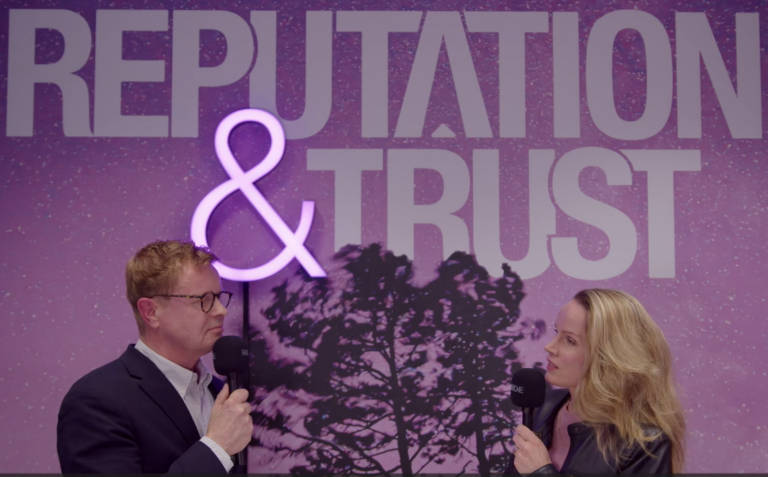
Senior Researcher Petteri Puska: “In these uncertain times, highly educated people want competitive pay, good opportunities for remote work, and job security.”
A good salary level has established itself as the most important criterion when choosing a job, according to our 2025 Employer Reputation Survey. Petteri Puska, a leading researcher at Reputation and Trust Analytics, believes this trend is linked to the search for security in an uncertain global situation.
Reputation and Trust Analytics’ Employer Reputation Research for the eleventh time in 2025. A total of 2,551 highly educated professionals in the technology and business sectors responded to the survey.
Each respondent listed the three criteria that were most important to them when choosing a job. Fifty-one percent of the respondents checked “good pay.”
A good salary level narrowly emerged as the most important factor in choosing a job in the 2021 survey, when 43 percent of respondents selected it. In 2022, 50 percent of respondents already listed salary level among their most important criteria.
“The increase from 2021 to 2022 was enormous. I think the underlying factors were the COVID-19 pandemic, Russia’s invasion of Ukraine, and rising interest rates. As uncertainty grew on many fronts, people began seeking basic security,” said Petteri Puska, a senior researcher at Reputation and Trust Analytics.
The Importance of Interesting Job Tasks Is on the Decline
At the same time as the importance of salary has increased, fewer and fewer respondents have listed interesting job duties and the meaningfulness of work among their most important criteria.
Before the COVID-19 pandemic, the interest of a job was sometimes even seen as a more important criterion than salary. In 2025, it will be at its lowest level on record, at 31 percent.
“This, too, is certainly related to the fact that, in these uncertain times, people want to meet their basic needs, such as making a living. When calmer times return, the importance of meaningful work and interesting tasks will surely rise again,” Puska said.
“Among the youngest respondents, there is already a slight increase in the perceived meaningfulness of work.”
Young people aren't looking for the opportunity to work remotely
Since the outbreak of the COVID-19 pandemic, the ability to work remotely has become an increasingly important factor in choosing a job. In 2025, as many as 30 percent of working adults considered it one of the most important selection criteria.
“Remote work is pretty much taken for granted these days; people want flexibility in their work and the ability to manage their own daily lives. The exception to this are students in the field; among them, the option to work remotely isn’t even among the top ten criteria in the study,” Puska says.
“This would suggest that young people, at the start of their careers, are eager to come to the workplace to learn—and at the same time to network and lay the groundwork for their career development. Their experiences with remote schooling and online learning during the pandemic may also be a contributing factor.”
More and more people are hoping for job security
Puska also highlights job stability, which reached its highest level in recorded history this year. One in five respondents listed job stability among their most important criteria.
“In a nutshell, one could say that in these uncertain times, highly educated people want competitive pay, good remote work opportunities, and job security, while they are willing to compromise on factors related to job interest and social interaction,” Puska summarizes.
Reputation and Trust Analytics’ Employer Reputation Research for the eleventh time from March to May 2025. The target group consisted of highly educated professionals and students in the fields of technology and business. A total of 2,551 respondents participated in the survey.
In the experiment, respondents were asked to select the three most important criteria from a list of 24 if they were choosing a job from among several offers. The list was compiled based on Reputation and Trust Analytics’ workplace surveys.
The study was conducted in collaboration with the Finnish Association of Economists, the Finnish Association of Business Graduates, TEK, the Finnish Union of Professional Engineers, and the subject-specific and alumni associations in these fields.
Petteri Puskaa was interviewed by Anu Räsänen, a communications specialist at Reputation and Trust Analytics.