Valio CEO Annikka Hurme: Trust is built through dialogue
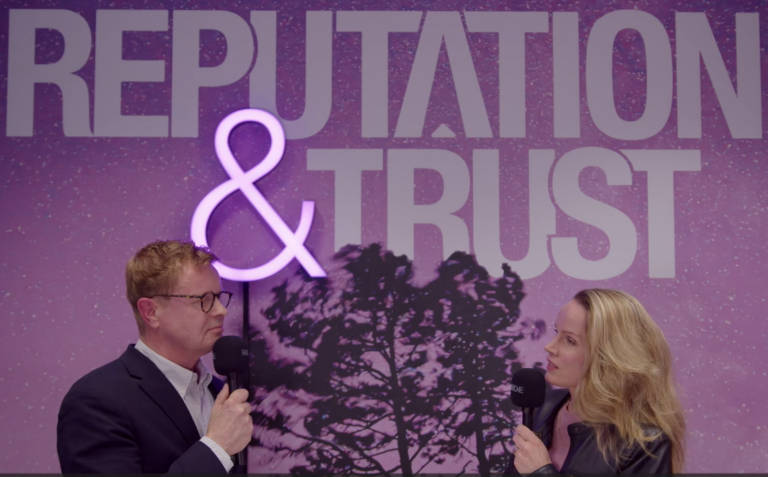
Valio has been ranked among Finland’s ten most reputable companies ten times—that is, in every annual “ Reputation&Trust ” survey of the general public conducted by T-Media. Our Development Director, Riku Ruokolahti, interviewed Valio’s CEO, Annikka Hurmetta, about reputation management and explored how this Finnish institution is built.
Every Finn is familiar with Valio and its products. This is also reflected in T-Media’s best-known survey, “ Reputation&Trust,” which celebrated its tenth anniversary last year. Valio has consistently ranked among Finland’s ten most prestigious companies throughout the survey’s ten-year history.
But how has Valio managed to do this?
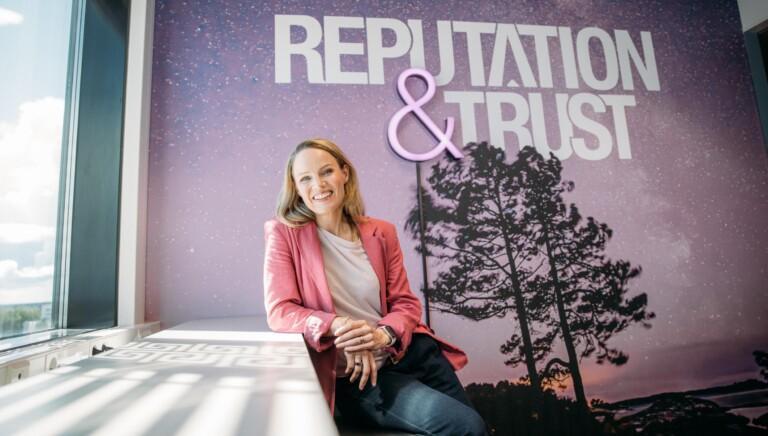
Annikka Hurme, who has worked in anseende for many years, recommends starting reputation management with values: what the product, service, and company stand for. She emphasizes that the company must first have a clear understanding of its values before it can communicate them to others.
Hurme says that outsiders’ perceptions of Valio as a company do not necessarily always align with his own, internal experience.
“Reputation can be based on a perception or on what one has heard from others. Valio is a brand-driven company, and brand and reputation go hand in hand. Reputation is extremely important.”
At Valio, we live up to our reputation every single day—we are open about our failures
Hurme, who holds a master's degree in food science, has worked at Valio since 1989 and has served as CEO since 2014.
Valio has a strong history and is well-known for its products. According to Hurme, Valio’s position means, in practice, that it must live up to its reputation every single day and with every single product. The challenge in living up to that reputation is that no one can succeed perfectly every day, and mistakes do happen.
So how are failures and mistakes handled?
“Openly. You can’t sweep things under the rug. If, for example, there’s a mistake in the quality control chain, it needs to be made public as quickly as possible and a recall issued. Our customers help us: if there’s a problem with a product, we’ll hear about it from our customers through customer service.”
“It’s never fun to admit when you’ve failed. But it’s something you have to do,” Hurme says.
Listen to and accept opposing views
In T-Media’s “ Reputation&Trust ” model, an organization’s overall reputation is calculated as the average of eight different areas. The organization’s reputation is thus influenced by its governance, finances, leadership, innovations, products and services, workplace, corporate responsibility, and interaction.
Riku Ruokolahti has observed that anseende challenge anseende many companies is interaction—that is, ensuring that the organization listens to and understands its stakeholders. Ruokolahti has also noted that the larger the organization, the more difficult dialogue becomes. Large companies often become harder to approach.
Annikka Hurme has also emphasized the importance of dialogue and has listed it as her most important principle of reputation management. According to her, dialogue enhances our understanding of what we hear.
“At one point, I thought it was enough just to be open about things. But was I really listening to what our customers wanted to say? We need to listen, ask more questions, and try to understand,” Hurme says.
According to Hurme, dialogue does not mean that a company must respond to the needs of everyone who disagrees. Similarly, there is no need to try to change opposing views, but differing opinions must be understood.
“We must accept opposing views. Not everyone has to think the same way about the health benefits of milk. But if we don’t understand the motives behind opposing views, it’s harder to engage in dialogue.”
“You have to understand, know, and build your own core and product portfolio in line with your own values—while paying attention to how the world is changing.”
Video: Vesa Koivunen