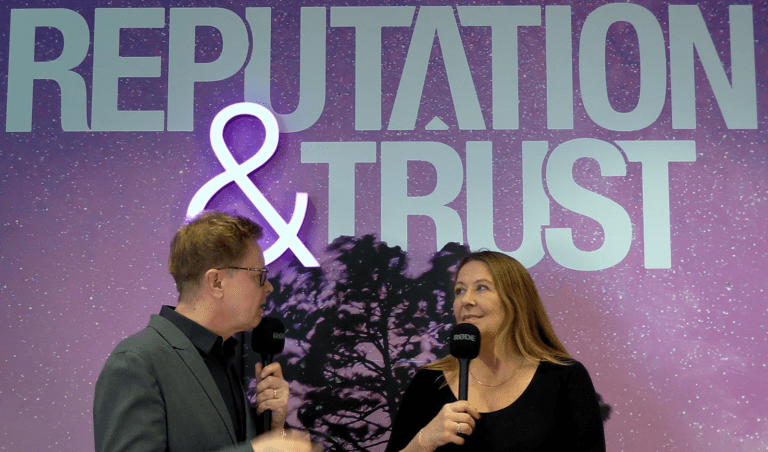
Reputation and brand went head-to-head — who won?
“For me, reputation is just a part of [the] brand,” said the brand head of the world’s largest steel producer at the end of his speech in Milan.
A major seminar on reputation and branding had brought together leading academics, consultants, and business leaders from around the world to discuss the topic. Debates over the relationship between reputation and branding took place on the main stage, in breakout sessions, and over drinks, lasting into the wee hours of the morning. In the end, the only thing that was clear was that the distinction was not clear.
This cockfight took place five years ago, and I still find myself caught up in the same squabble. To this day, far too many people are trying to separate corporate reputation from the brand—or vice versa.
"Why shouldn't they?" you might ask, and that's all well and good. The reason is simple. Separating the two can harm your business.
We’ll start by looking at the corporation and the product separately.
So, let’s take a closer look at how brand and reputation interact. We’ll start by examining the corporation and the product separately.
On the one hand, the public forms a perception of a company as a workplace, of how responsibly it operates, and of how transparent it is in its dealings. Audiences also consider the strength of the organization’s financial performance and the quality of its management. At T-Media, we view these aspects of perception as the corporate ethos.
On the other hand, customers have certain perceptions of the company’s products—such as their price and quality—as well as the organization’s innovativeness. These qualities are related to the benefits the product offers customers, and this is what we mean by “brand.”
In recent years, we have collected a massive amount of data through our cutting-edge reputation and trust research, and in the process, we have gained a fair amount of insight into the topic. Recently, given the volume of data we have compiled, we saw an opportunity to examine how corporate ethos and brand influence consumers’ willingness to buy or recommend a product.
To cut to the chase, our findings indicate that corporate ethos accounts for 71% of purchasing decisions, while the brand accounts for only 29%. In other words, corporate ethos is a much stronger driver of consumers’ willingness to buy than the product itself.
Take a guess: Which of the two has a greater impact on consumer behavior? Corporate ethos or brand?
To cut to the chase, our findings indicate that corporate ethos accounts for 71% of purchasing decisions, while the brand accounts for only 29%. In other words, corporate ethos is a much stronger driver of consumers’ willingness to buy than the product itself.
We have been researching this phenomenon since 2013, and during that time, the importance of corporate ethos has only grown.
At this point, one might be tempted to conclude that reputation is much more important to business than a brand. Yes, we’re onto something, but it would be dangerous to draw that conclusion. Because, in truth, corporate ethos and brand alone are not enough to understand the formula for success. There are two other significant aspects to the bigger picture that we need to consider.
So stay tuned. I'll be discussing these two aspects in my next post, coming soon.

“For me, reputation is just part of the brand,” concluded the chief brand officer of the world’s largest steel producer in his speech in Milan.
Leading academics, consultants, and business executives in the field were invited to the roundtable discussions at the reputation and branding seminar. The same topic was debated on the main stage, in small groups, and even over cocktails in the evenings. One thing became clear: there is no consensus on the subject.
It’s been five years since the Milan cockfight, but I still find myself in the same predicament. Too many companies stubbornly build their brands separately from the company’s reputation. The same thing happens the other way around.
Why shouldn't we do that? Because backstabbing can be devastating to a business.
First, you need to be able to distinguish between a company and a product.
Let’s take a closer look at anseende brand building. First, we need to distinguish between the company and the product. The public has a perception of the company as a workplace, as well as of its corporate responsibility, transparency, financial success, and leadership. At T-Media, we refer to these company-centric perceptions as the company’s ethos.
On the other hand, customers have perceptions of a company’s products: their price, quality, or, for example, their innovativeness. These factors relate to the benefits the customer receives. In this context, we are referring to the product brand.
At this point, a bold move might be to cut through the red tape and separate anseende the brand.
When examined through Reputation&Trust, it becomes clear that a company’s ethos accounts for 71 PERCENT of the purchasing decision, while the product brand accounts for 29 PERCENT. A company’s ethos therefore has a significantly greater impact on the desire to purchase than the product itself.
However, since we have a vast amount of data and expertise from Reputation&Trust, we couldn’t resist analyzing the issue more closely. We examined the connection between a company’s ethos and its product brand and consumers’ willingness to buy or recommend the company’s products. Can you guess which one has a greater impact on purchasing intentions?
An analysis using Reputation&Trust reveals that a company’s ethos accounts for 71 percent of the purchasing decision, while the product brand accounts for 29 percent. A company’s ethos therefore has a significantly greater impact on purchasing intentions than the product itself.
We have been studying this trend since 2013. The importance of a company’s ethos has only grown during this time.
Eetos is reshaping perceptions of its products.
We have been studying this trend since 2013. The importance of a company’s ethos has only grown during this time.
It would now be easy to draw another conclusion: that anseende is significantly more anseende to business than the product brand. This is, in principle, an important insight, but a dangerous one to take as a final conclusion. The fact is, these two factors alone are not enough for success. Alongside anseende brand, there are two other factors at play, the significance of which I will explore in my next post.