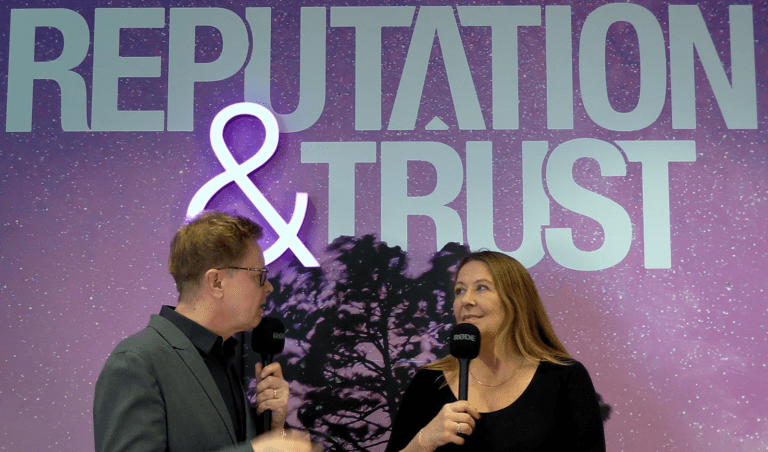
Nina Elomaa, Head of Corporate Responsibility at Fazer: “Reputation must be managed in a way that adds value to the company”
“Reputation is of enormous importance to companies. Reputation is something that needs to be managed. Reputation is capital,” says Nina Elomaa, Fazer’s Head of Corporate Responsibility, summarizing anseende .
And since reputation has value, it is, of course, essential to ask how that value can be increased. This is a question that is sure to interest the shareholders of every company.
Nina Elomaa, Head of Sustainability, Fazer
A veteran in sustainability, corporate responsibility, and environmental management, and an expert in stakeholder relations. With an educational background in energy and environmental issues, she has worked in the field of sustainability for many years.
“We may have thought too much about reputation in terms of risk or anseende . It’s quite rare to start from the premise that reputation needs to be built—or that reputation could be managed in a way that adds value. I think it’s important that we start to move forward with this aspect as well,” Elomaa says.
Reputation is everyone's responsibility
Elomaa points out that anseende is no different from managing anything else.
First and foremost, this means that we need to talk about reputation. Company leadership must understand what reputation means and what its strategic significance is.
anseende starts with getting management on board, but that alone is not enough. It is necessary to initiate and maintain discussions about reputation at all levels of the company.
“We shouldn’t think of reputation as something that’s just the responsibility of the executive team, the board, or the owners—it’s every employee’s responsibility. Every employee contributes to that reputation at every moment. The elements that make up our reputation must be maintained as part of our day-to-day operations, which means it’s also a matter of operational management.”
Elomaa notes that reputation is, of course, not something that can be taken for granted. In order to give concrete form to the concept and its implications, reputation must be measured.
When reputation is measured, its development can be systematically tracked, analyzed—and managed.
Show off your reputation metrics and results
“Management teams don’t have time to spend hours debating issues. They need to be able to systematically track where we stand and what our reputation looks like, and analyze the reasons behind it. That way, we can move things forward at both the strategic and operational levels.”
But how do we bring that reputation down to the operational level and keep it there as part of our day-to-day work?
“One way is to make it visible: display your reputation metrics and results. Show them everywhere: on information boards, on information screens—right on those same channels where you share updates about other company events, such as personnel changes or menu updates.”
[button url=”/academy/” size=”btn-md” style=”btn-primary” target=””]View other Academy episodes[/button][button url=”/reputation-trust/” size=”btn-md” style=”btn-secondary” target=””]Learn more Reputation&Trust[/button]
Text: Anu Räsänen
Video production: Vesa Koivunen, Harri Leinikka, Tuuli Pohjola, and Riku Ruokolahti