

Lauri Sipponen: From outcast to beloved member of the group – how to turn your reputation around
I was involved in Lidl’s operations in Finland from the very beginning, throughout the first two decades of the 2000s. I therefore bear some responsibility—and am partly to blame—for how Lidl’s reputation in Finland has developed.
I took over as CEO in February 2010. By then, Lidl had already opened about a hundred stores in Finland, and the network covered the entire country. However, the chain was still relatively unknown to the public. People had heard of Lidl, but they didn’t really know it. They have pretty good candy, sausages, and vegetables here, but who owns this store? What a strange store.
A small group of Finns were certainly raving about Lidl. They were mainly people who had lived in Spain or elsewhere in Europe for part of the year and had become familiar with the Lidl chain there, as well as various Finns who had lived abroad and returned home from around the world. At the other extreme was an equally small group who felt that this wasn’t a real grocery store at all, but just some kind of weird box store. For the vast majority of Finns, however, Lidl held no emotional significance. Everyone knew Lidl, but it didn’t stir up any feelings.
We realized that we had to establish some kind of emotional connection with the consumer. They need to feel something when they think of Lidl. We can’t remain strangers to Finns; instead, we need to become part of Finnish life and Finnish society. These were clear, concrete goals we set for ourselves. We were realists. We realized that now we had to roll up our sleeves and get to work if we wanted to achieve these goals and stir up consumers’ emotions. Of course, we preferred to evoke positive feelings, but even a negative feeling is better than no feeling at all. It’s pretty hard to build a business if the general public has zero emotional connection to the company.
The grocery industry is particularly sensitive in this regard. Ultimately, it’s a matter of trust when it comes to products you put in your mouth and serve to your loved ones.
The Surprising Power of Employer Perception
In 2010, with a great deal of humility, we set out to examine our reputation. First, we used various surveys and panels conducted by Taloustutkimus to determine why people visit us or don’t visit us, as well as what strengths and weaknesses we have in the minds of our own customers and our competitors’ customers.
We began working on these issues in late 2010. We expanded our product range, revamped the layout and appearance of our stores, trained our staff, and tackled many other tasks as well. We also added a touch of humor to our advertising. Eventually, all these efforts came together, and business started to take off. We noticed, however, that our reputation wasn’t keeping pace with our sales. We always took a real beating if there was even the slightest flaw in our operations. This brings us to one of my favorite terms, resilience, which we later learned a lot about while studying trust and reputation.
When it comes to human activity, mistakes are bound to happen. Someone might slip on the store floor, a package might leak, or a customer might not like the taste of a product. When a company’s reputation is strong, stakeholder support provides resilience, and these minor setbacks won’t leave a lasting dent in its reputation.
In 2013, we began researching Lidl’s reputation using T-Media’s “Reputation&Trust ” model. We wanted to find out what was preventing consumers from forming an emotional connection. Once we identified the causes, we began to grasp the causal relationships and understand what lies behind reputation. These were eye-opening insights. We were able to manage our customer relationships in a more balanced way once we understood the full scope of what reputation and customer trust in us entail. It took a lot of hard work. This involved developing our product selection, revamping store operations, and completely overhauling all stakeholder communications.
We examined the anseende dimensions anseende and learned that a grocery store’s reputation is not built solely on the shopping experience. We realized that we needed to strengthen our reputation in a broader sense in the eyes of the public. Later, other stakeholders also became involved. We realized that even if a consumer likes us, a government official or politician might, due to the nature of their work, view things differently, and these stakeholders differ from one another. Therefore, we must monitor our reputation among all key stakeholders.
From the very beginning, we had great products and services that people truly trusted and believed in. We were considered the most dynamic and modern retailer, and in that respect we were genuinely ahead of our competitors. We thought, “This is a winning strategy; let’s stick with it.” But that wasn’t enough.
We got to the topic of correlations very quickly. We learned that employer brand has a huge impact on the image consumer customers have of a company. We in the management team certainly had a hunch about the significance anseende this anseende . However, none of us had realized just how big an impact it has on overall reputation and how it correlates with stakeholder support—both among customers and, for example, government officials.
To put it a bit bluntly, one might ask which type of employer the authorities prefer to deal with and to whom they would rather grant a business license: a reputable employer or one with a bad reputation. The same applies to consumers. The prices are fine, but their reputation as an employer is poor, so I’ll go somewhere else.
When we started measuring our reputation and working systematically to improve it, the biggest improvement was in our employer image. We did a lot of different things to achieve that. Of course, the improvement didn’t happen overnight; our employer image remained stagnant in the surveys for a while. Those were painful moments for the HR director. We were working our butts off the whole time. Employee satisfaction and work quality were at a good level in the regular surveys, but it still felt like we were banging our heads against a concrete wall.
It was, in a way, a crossroads between cognitive dissonance and the confirmation bias. Once a person has gotten it into their head that something is bad, that idea sticks fast, even if more and more sources are saying that it’s actually good. There has to be enough positive feedback before an opinion finally shifts. That’s exactly what happened with Lidlink. All the hard work and relentless effort paid off.
[button url="/luottamus-maine/" size="btn-md" style="btn-secondary" target=""]Learn more about the " Reputation&Trust" model[/button]
Cultures clashed and ties flew into the corner
The shift in our employer image was an experience that strengthened our confidence. We learned that we need to think about things from multiple perspectives and that we must also communicate openly about our actions. Even if employees know that Lidl is a good employer, other stakeholders may not necessarily be aware of this. In 2010, Lidl Finland made a complete turnaround in its communication strategy. Lidl is a German family-owned business. And in Germany, family-owned businesses—and many other large companies as well—prefer to keep their owners and management out of the public eye. This secrecy has historical roots; at the latest during the Baader–Meinhof Group’s attacks, family owners went underground. The less known you are, the safer your life is in Germany.
As a result, companies in Germany generally don’t say much or speak out publicly anyway. If the owners don’t speak up, neither does the executive board. Germans are fine with this. They believe it’s enough for a company to pay its taxes in the country and provide jobs in the local community. For a long time, this has been enough anseende good anseende in Germany. Cultures clash when a company like this expands internationally and comes to Finland. A country where personal responsibility and transparency are core values of family businesses. In Finland, we like to proudly share how many generations our family has already been at the helm.
Lidl’s first decade in Finland was guided by the German rule of silence. We are a family-owned company, and we don’t need to say anything. Let the products speak for themselves. Let job creation and major investments in Finnish society speak for themselves. Consumers make their choices based on products and services. Management doesn’t need to be in the spotlight for that.
But in Finland, that’s what’s needed. In Finland, people want to know and see the faces behind the business. Finns want someone to confirm, in person and with a smile, that taxes are paid here, that staff are treated well, and that the quality of operations and products—as well as the company’s commitment to responsibility—stand up to scrutiny. It is not enough that this information can be dug up from the tax authority’s files and various product labels.
As we entered the 2010s, we set out to change things in a way that would work specifically in Finland. We began to take liberties that supported our overarching goal: to increase sales, attract more weekly customers, and retain our best employees. We also aimed to increase the average purchase amount of our existing customers.
There is no food shortage in Finland, and we didn’t have a single product that was so superior that no one else had it. Consequently, we had to take customer growth away from our competitors. Our competitors were old, established domestic players: the S-chain, which represents the cooperative ideal, and the publicly traded company Kesko, whose stores are run by local entrepreneurs. Finns have a very strong, even emotional, connection to both of these players. It was really clear that we, too, needed to bring emotion into the mix. We have to put a face to the company, and that face has to be human and approachable.
Here we get to the fun little details. First, middle and upper management ditched their ties, then their suits. Top management was constantly on the move in the stores, but someone who always looks like they’re coming from a funeral isn’t exactly approachable to a Finn. It’s much easier to approach someone dressed in jeans and a blazer.
These were fairly pragmatic measures that supported the overall transformation. They were so well-received internationally that, at some point, a directive was issued to the entire group stating that wearing a tie was not recommended and that formal forms of address should be avoided. I would venture to say that we Nordics served as an example in this regard and that others were even a bit envious of how non-hierarchical, fast, and effective our communication is between management, different employee groups, union representatives, and even all external stakeholders.
In Finland, it’s also crucial to realize that instruction manuals alone aren’t enough. You have to know why. You can get a Finn to fight ten enemies with nothing but a marker in hand, if you just explain why. When we shifted our communication to be more motivational, our staff began to understand things and got excited. The change was visible. Even to the outside world.
I am a motivational leader. My leadership philosophy is that people are motivated by receiving human cues that others can pick up on. People themselves form the motivating connections in their own minds that drive their actions. You don’t lose your authority by being human.
In addition to human-centered, motivational leadership, we focused on customer-facing operations, marketing, and advertising. As a result, revenue began to grow, and we started turning a profit. And such success doesn’t go unnoticed even at the corporate leadership level. At that point, international management quietly acknowledged that those Finnish girls and boys couldn’t be entirely wrong. We were allowed to continue, and the success began to spread internationally as well.
Key stakeholder: our own staff
It can sometimes be difficult to change a culture when everyone knows—and can even see firsthand—that change always comes with risks. What if we do the wrong things and head in the wrong direction? What if the parent company doesn’t approve of the changes? This is where management’s role comes in. I made it clear to the management team that if things go wrong, the CEO will protect them. It is the CEO who will leave if the change does not go well and mistrust arises—meaning that trust and reputation cannot be sustained. I made sure my colleagues knew this and dared to trust me and each other. This trust boosted everyone’s courage and initiative in decision-making. Of course, I did my best to support this role through good communication with the parent company. This international “corporate stuff” isn’t always easy, let alone fun. But every job has its own cross to bear. Let’s just go for it!
I never even considered the possibility that we couldn’t make the change. And no one complained, asking if it was really necessary, or if we couldn’t just keep doing things the way we always had. Everyone surely understood that the core business was in good shape and the store network was healthy, and the company had no worthless assets that would have been a nightmare for management.
The foundation was truly solid. Our parent company was a stable, long-standing family business. I had been involved from the very beginning and had seen for myself that there were no glitches in the system and no skeletons in the closet. There was no need to worry that some kind of mess would come crashing down on us. I also knew that in this company, all the basics of business and finance had been handled correctly and that my predecessor was skilled at his job. So the conditions for success were in place. Now I just had to find the ways to take things to the next level. Pretty quickly, everyone in the company understood
my message.
When I took the reins in early 2010, I immediately started thinking about what needed to be done. I realized that we had very little research data. Even though I’m not a scientist or a data analyst, I definitely wanted to know the facts about where we stood. Forecasts need to be based on something when making investments and other decisions. And there’s no need to blindly follow competitors when the facts are available.
Even though we were a bit inexperienced with data at first, we did start to find evidence there to back up our decisions. Something has to be done if that indicator is in the red—it’s been there for two years—and so much lower than our competitors’. It doesn’t help to tell your reflection, “We’re good, but the team just doesn’t get it.” I, too, often found that it doesn’t always matter how things are, but rather how they appear from the other party’s perspective. We all struggled with this reality ourselves.
In 2012, we launched a customer experience project under the working title “Ilo palvella!” The name was originally intended for internal use, but it spread to our customers and became, in a way, our customer promise. This idea was reinforced in our overall stakeholder approach when T-Media joined our reputation management efforts.
The “It’s a pleasure to serve!” philosophy is based on the idea that if I, as a manager, and all of us as colleagues don’t serve one another, the colleague next to me won’t be motivated by anything. If we at headquarters fail to serve one another and if we visit distribution centers only to give orders, how can we expect the people working there to be enthusiastic about serving one another and their colleagues in the stores? Or if we don’t properly support the store, how would the store staff be interested in serving customers? If a planning official doesn’t trust our store manager and doesn’t find it worthwhile to do business with the company he represents, no new store will be established.
To me, this chain of causality was self-evident. Of course, this line of thinking required some explanation to the management team and, more broadly, to the organization. However, my colleagues were soon on board with my idea. We started from the premise that we serve one another, and from there we move toward the customer and other external stakeholders.
The “It’s our pleasure to serve you!” philosophy applies to everything we do, and ultimately, it always reflects on the paying customer. This isn’t achieved through training that teaches employees to smile when a customer hands over a payment card. What’s needed here isn’t smile training, but training in organizational culture. A good service experience and customer experience come naturally from the whole picture—from how people talk to each other, how people interact with one another. It doesn’t build trust in the store if, while you’re picking out a product, you hear employees behind the shelf badmouthing each other and their boss. An employee’s performance isn’t improved by not trusting them, nor is it improved if the person doesn’t get along with their colleagues.
We brought the “Joy of Service!” philosophy to life with the help of managers and external facilitators. Among other things, we organized “Joy of Service!” games, which we took to various offices, logistics centers, and stores. All of this convinced people that we mean business. This isn’t a joke or a slogan of the year that will be replaced by a new one next year.
That was a damn good move. It’s how the issue became part of a bigger picture that the entire staff was committed to. It’s good to remember that your own staff is a very important stakeholder— anseende the most important one when it comes to building anseende trust.
You can't build a reputation if you don't talk about it
T-Media’s “Reputation&Trust ” model reinforced our understanding that reputation is a multifaceted concept. Lidl is now on solid ground and achieving good results across all dimensions of the reputation model. Reputation metrics are important, but equally important is how they are used as management tools. At Lidl, they have been incorporated into annual planning and performance monitoring.
We wanted everyone here to understand the importance of these metrics and know where we’re headed. We shared the results with store managers and all other supervisors, who then passed on the information about how our reputation has evolved during their own team meetings. There is nothing in this information that needs to be kept from employees. It is impossible to manage reputation if you don’t talk about it.
We have outlined our reputation management activities and initiatives along the way and explained why we are doing this work and which key metrics it relates to. We have presented key metrics and correlations in various contexts. What happens if customers think this way or if another stakeholder group thinks that way? What happens when reputation measurement results improve?
The key point is that people understand this is everyone’s responsibility—not just management’s or the store’s customer service staff’s. This isn’t some isolated element or just a feather in management’s cap. If we succeed in this, we succeed together and gain more customers and market share.
Things won’t change unless you take the initiative to change them, and they won’t change just because you order them to. If you want to achieve high-quality results over the long term in reputation management—or in any line of work—motivation is always the driving force, and understanding is the foundation of that motivation. And everyone must share that understanding.
When I, as CEO, visit a store to talk with the staff, my message must be consistent with what they have heard from their immediate supervisor. It can’t be the case that only I, as CEO, know this, and that only my divine knowledge is enough to manage this reputation.
Communication and accountability are essential
I’d argue that the secret to Lidl’s success is that we managed to get the entire management chain and staff on board with this initiative. It involved the “Joy of Service!” pledge and concrete actions that got people involved. We got the team to understand what it was all about through simple, concrete actions. We spoke a common language. It’s easy to make success look like a CEO’s show, even though that’s definitely not what it was.
I had to do my part, but it was a massive undertaking in which everyone took care of their own responsibilities. The strong end result and major business growth would have remained mere ideas on the drawing board if we’d kept store managers or other key personnel who didn’t understand the importance anseende trust and anseende . Each person reinforced these values among their own stakeholders during their workdays.
Take sustainability, for example. For decades, Lidl has done a tremendous amount of work in the areas of environmental friendliness and sustainability. We are certainly Finland’s first retail chain to implement heat recovery and to switch all lighting to LED technology. We have the most energy-efficient cooling systems available.
Our logistics operations are among the most efficient in the world. We’ve been handling and recycling packaging materials in a closed-loop system for years, long before other companies caught up. We’re helping to save the planet in many ways while also cutting costs—but why aren’t we talking about it? Let’s add that to our messages here, too.
It cannot be emphasized enough that communication must not be greenwashing; rather, it must be based on facts.
You can’t bluff or cut corners when it comes to responsibility; you’ll get caught eventually. But if you want to do things right today and succeed in the long run, you automatically have to think about responsibility. Responsibility means taking the long view, and taking the long view is responsible.
From person to person
I left Lidl myself after 20 years, as we entered the 2020s. The first decade of the 2000s was a time of building for Lidl in Finland, and the 2010s were a time of development. The new decade brings new challenges. I realized that it was now time for me to pass on my experience at Lidl to the next generation and continue learning new things myself.
When I became CEO, Lidl had a bit of a reputation as a “model student,” and that was reflected in our first brand reputation survey in 2013. The entire industry has changed since then. Lidl has certainly pushed its competitors—just as its competitors have pushed Lidl. Currently, we have three major players in the grocery retail sector in Finland, each striving to stand out through their own strengths. To put it bluntly, Lidl has managed to evolve from an outcast into an accepted—and perhaps even beloved—player in the grocery retail market.
What did I learn from this? First of all, that you have to believe in your cause and work hard to achieve it. I believed in Lidl’s reputation-building efforts, and fortunately, I was able to work on the project alongside skilled colleagues. Together, we succeeded.
Bringing about change requires vision, a willingness to take risks, and perseverance. You have to put yourself out there and be ready to explain things clearly in order to motivate others. You have to believe in your cause if you want to succeed in motivating customers to visit your store. If you can’t convince a customer that you’re a friendly and skilled salesperson, that your products are top-notch, and that your store is worth visiting, the cash register won’t be of much use to you.
At Lidl, the “Happy to Serve!” philosophy was always passed from person to person and spread through people’s own enthusiasm. This approach wasn’t forced on anyone. When we think about how we speak to our colleagues and how we behave toward one another, it inevitably carries over to our customers and other stakeholders. From the retailer to the customer. From person to person. For me, commerce is an interaction between people. Even in digital channels. There are always people behind the scenes.
Reputation is all about chemistry between people. Just like love—the greatest of all forces—it’s all about chemistry between people. Love and reputation are worth investing in.
Illustration: Harri Haarala
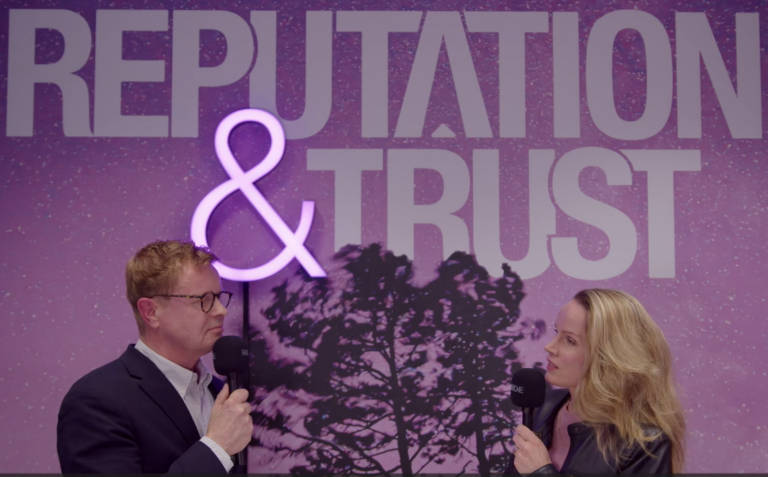
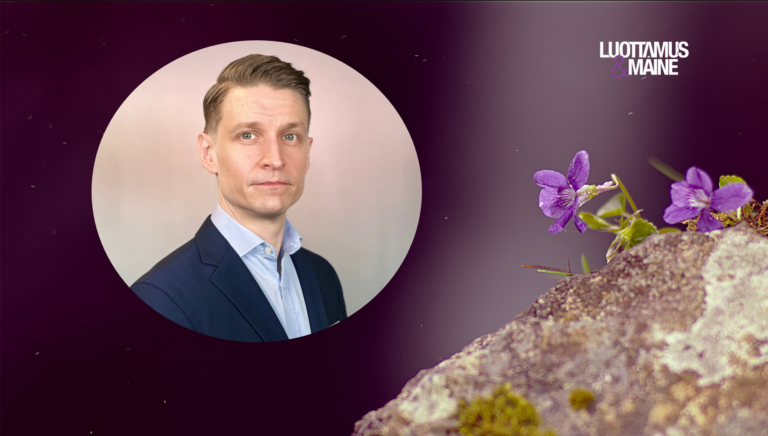
Lauri Sipponen spent 20 years in management positions at Lidl, the last 10 of which as CEO. Lidl launched in Finland in the fall of 2002, and after many milestones, it became Finland’s most renowned retailer in 2019. Lauri currently serves on the boards of several companies. Watch Lauri’s interview below.
Lauri has co-authored a handbook on corporate reputation and reputation management. The article published here , “From Outcast to Beloved Member of the Team: How to Turn Your Reputation Around,”can be found in the handbook’s third section: “Practical Experiences of Leaders.”
[button url=”anseende” size=”btn-md” style=”btn-primary” target=””]WATCH THE INTERVIEW[/button][button url=”anseende” size=”btn-md” style=”btn-secondary” target=””]Order the handbook[/button]



One Comment
Comments are closed.