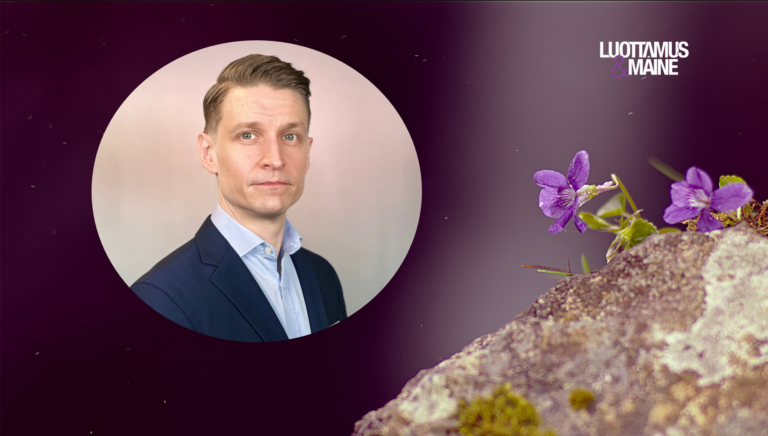
Mikko Helander, CEO of Kesko: “A good reputation will continue to support strong commercial performance in the future as well”
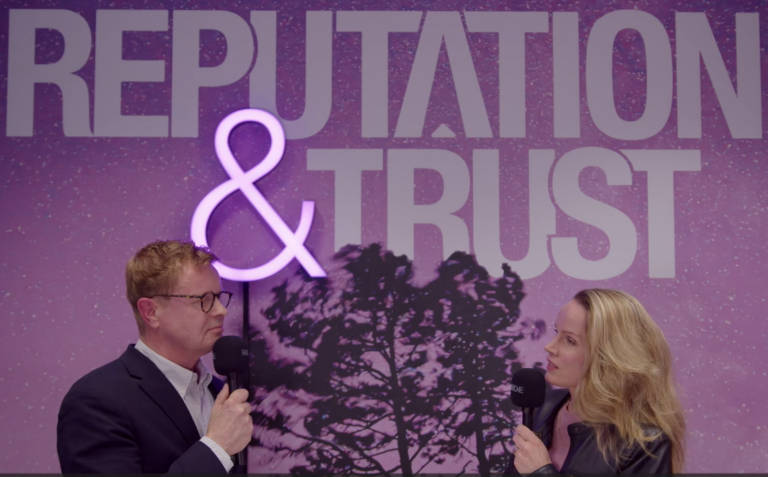
Kesko CEO Mikko Helander shared his thoughts with T-Media anseende at a publicly traded company. At Kesko, reputation management is carried out as part of strategy implementation; trust and reputation are systematically measured across multiple stakeholder groups, and the results are reported all the way up to Kesko’s Board of Directors.
“It’s fair to say that anseende has become even more pronounced today, and I believe this will be even more true in the future,” Mikko Helander notes.
In Helander’s view, reputation is the foundation of a well-functioning business. That is why every successful and responsible company pays attention to its reputation and works to improve it.
“In many cases, this is a prerequisite for being able to operate in the market at all, as well as for successfully serving existing customers and attracting new ones.”
Helander believes that corporate responsibility and a good reputation go hand in hand these days: a company’s reputation can be built through responsible business practices.
“In many ways, responsibility and reputation are one and the same these days. When we talk about responsibility, it really encompasses all of a company’s operations and activities. I don’t believe that, without responsibility, it would be possible to build a solid reputation on a stable foundation.”
The K-Group’s commitment to sustainability is reflected in T-Media’s ESG index, which comprehensively tracks public perceptions of organizations’ environmental, social, and corporate responsibility. “A real breakthrough in the K-Group’s ESG perceptions occurred after 2018, when public views on companies’ overall ESG performance declined, but the K-Group, on the contrary, boosted its ESG image to a record high,” says Harri Leinikka, CEO of T-Media.

Using T-Media’s ESG indicator, organizations can develop and target their ESG measures in the most effective way possible, as well as track their progress relative to the general index, their industry, and their competitors. In the graph, the black line represents the ESG index of companies in Finland from 2013 to 2021, while the colored line represents the development of the K Group’s ESG perceptions.
Reputation management starts with strategy
According to Helander, reputation is a key priority for the K Group, and the company is making a systematic effort to build it as part of its strategy implementation.
“I believe that this work, too, must begin with strategy. When a company has a well-functioning strategy and makes the right strategic choices—which are then consistently implemented throughout the organization—this leads to commercial success, improved results, and creates the right conditions for achieving success anseende . An improving reputation will also support our strong commercial development in the future,” Helander says.
Helander cites focus, growth, operating as a unified “K,” and investing in responsibility, customer experience, and digitalization as Kesko’s strategic priorities. According to Helander, the consistent implementation of this strategy year after year has yielded good results: growing sales, a strengthening market position and profitability, as well as a significant increase in shareholder value.
An important part of the job is monitoring anseende among various stakeholders
At Kesko, trust and anseende are anseende at all levels of the company: in business operations, business sectors, Group functions, sector management teams, and the Group Executive Board. Helander also notes that Kesko’s Board of Directors regularly reviews the company’s anseende .
“An important part of this work is to extensively monitor anseende among various stakeholders at all organizational levels. A key aspect of this monitoring is that, at all organizational levels, conclusions are drawn from the monitoring results regarding the measures that can be taken to strengthen the organization’s reputation,” Helander explains.

[button url=”/trust-reputation/” size=”btn-md” style=”btn-primary” target=””]Read about the “ Reputation&Trust ” model[/button] [button url=”https://reptrust.com/maineen-johtamisen-kasikirja-tilaus/” size=”btn-md” style=”btn-secondary” target=””]Download the Reputation Management Handbook[/button]
As an example of stakeholders, Helander mentions the company’s current and potential employees.
“When we think about our staff, workforce, and employees—both current and future— anseende plays anseende key anseende . This is true in our relationships with all stakeholders. When our reputation is good and continues to improve, it’s always easier to collaborate with all stakeholders. This also applies to our staff.”
“Today, not only in Finland but also globally, competition for good employees is fiercer than ever, so anseende is becoming increasingly anseende in this area as well.”
Video: Vesa Koivunen
Text: Tuuli Pohjola